Hair Maintenance
Cold air, indoor heating and hats all pull moisture from your hair. Here’s how to keep it soft, strong and static-free until spring.
Get Your Personalized Hair Plan →Published by Hairporium · November 2, 2026
In this guide
Why winter is hard on hairProblems at a glance12 ways to protect your hairWigs in winterExtensions in winterWinter hairstylesWhen to see a doctorFAQTo protect your hair in winter, keep moisture in and friction down. Wash with lukewarm water and only as often as your scalp needs, condition every time, use less heat, dry your hair fully before you go out, and line your hat or scarf with silk or satin. Wigs and extensions need the same care, plus extra attention at the nape, where coats and scarves rub.
Below: why winter is so hard on hair, the most common problems and their fixes, twelve simple habits, and what changes for wigs and extensions.
Cold air holds very little moisture, and indoor heating dries the air even further, so hair loses water faster than it can hold onto it. Hats, scarves and coat collars add friction, which roughens the hair’s surface and builds static. Add hotter showers and more heat styling, and hair ends up dry, frizzy and more likely to break.
| Problem | What causes it | What helps |
|---|---|---|
| Dryness and breakage | Dry air indoors and out, hot water, heat styling | Lukewarm water, conditioner every wash, less heat |
| Static and flyaways | Dry hair plus friction from hats and scarves | Leave-in conditioner, a silk or satin hat lining |
| Frizz | Moisture loss from heating and hot showers | Deep conditioning, air drying, smooth fabrics |
| Dry, itchy scalp | Dry air and hot water | Lukewarm water, shampoo on the scalp only, a gentle routine |
| Hat hair | Pressure and friction under a tight hat | A loose, lined hat, and a quick refresh with a little leave-in |
| Tangles at the nape | Coat collars and scarves rubbing | A low bun or braid, and gentle detangling every day |
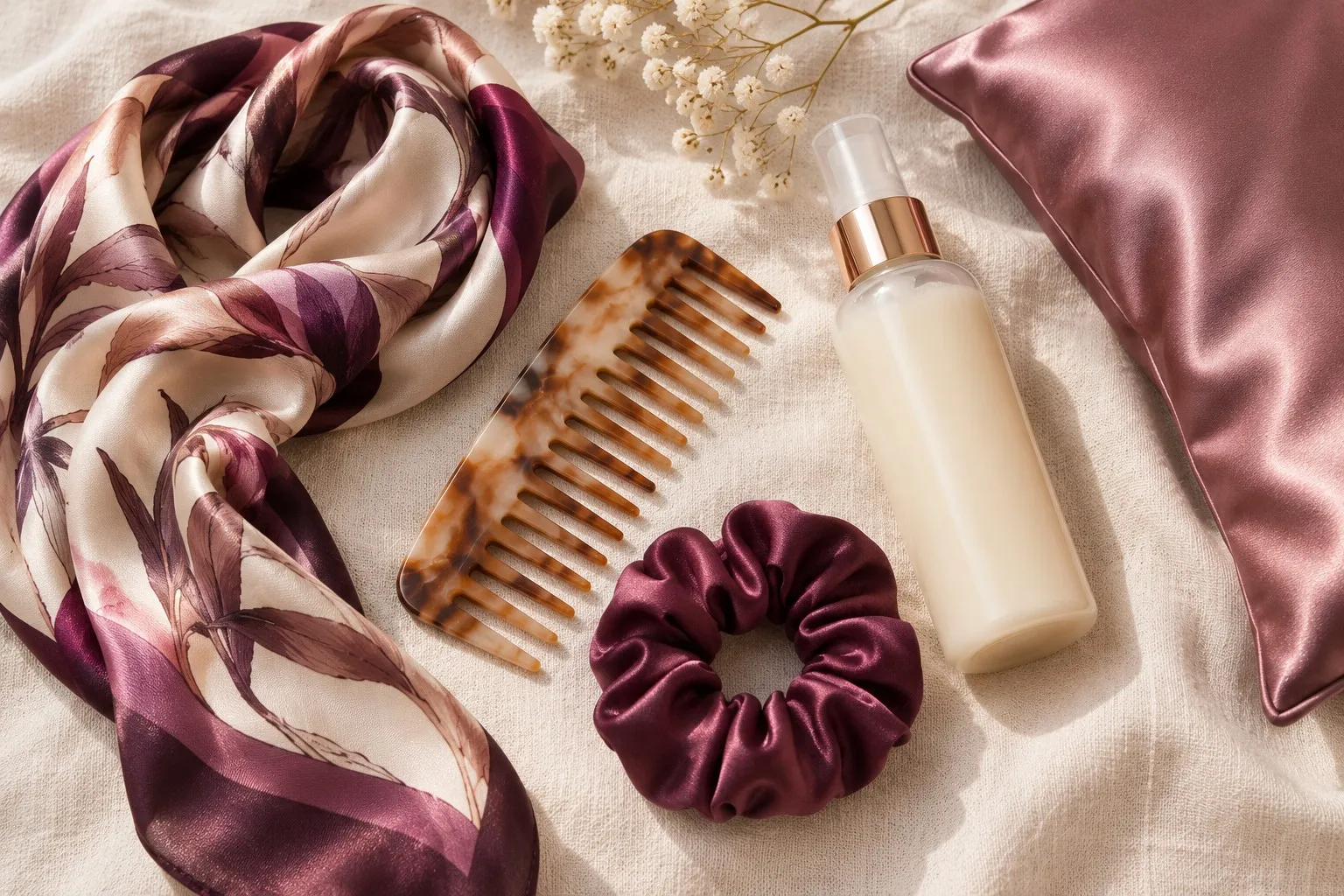
Bonus: sleep on a silk or satin pillowcase, or wrap your hair in a satin scarf, so it doesn’t rub against cotton all night.
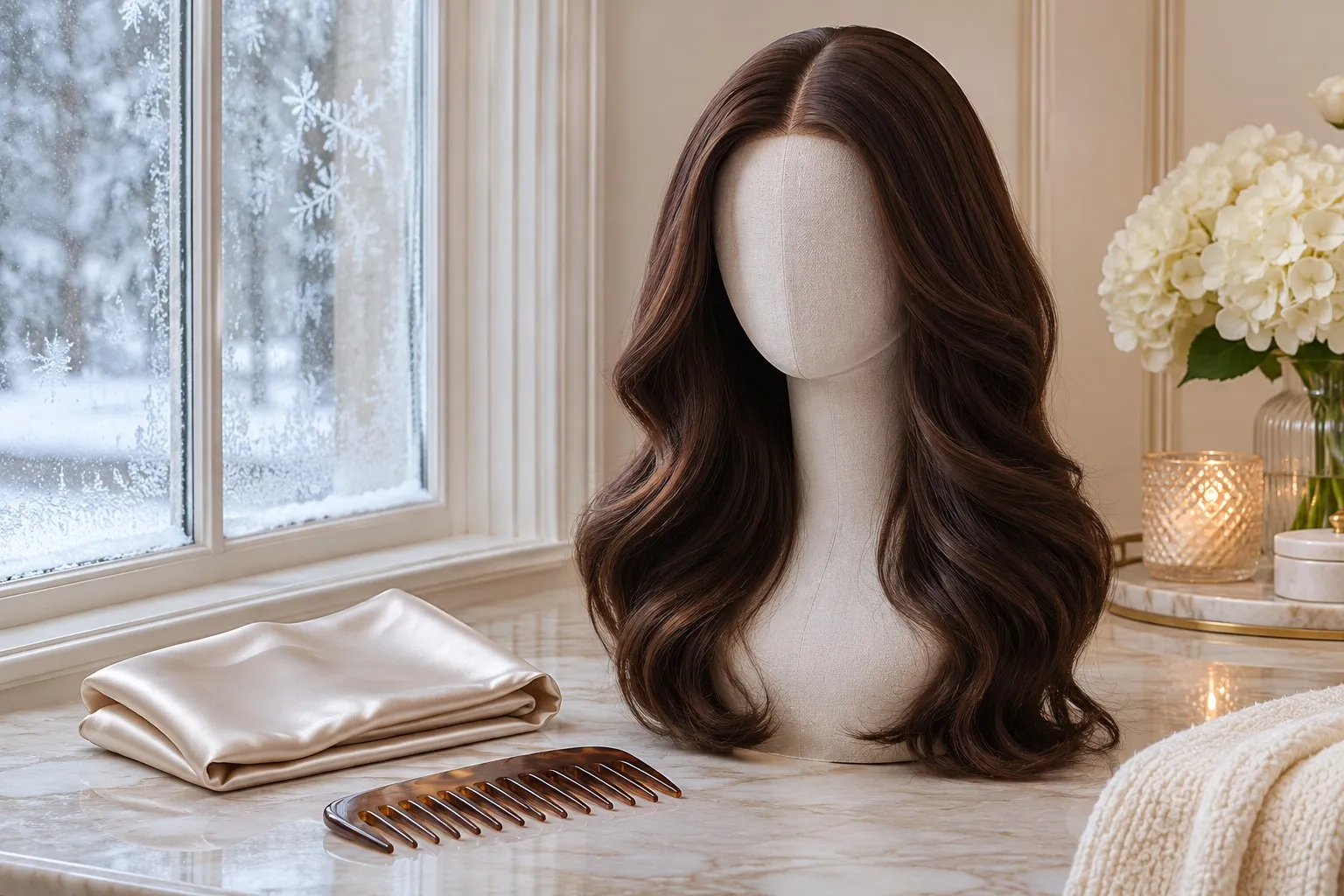
Not sure which wig suits winter wear? See human hair vs synthetic wigs and how to choose a wig.
For more, see clip-in vs tape-in extensions and the best hair extensions for thin hair.
For more low-effort ideas, see hairstyles that require minimal styling.
Most winter dryness improves with a gentler routine. If your scalp stays itchy or flaky for weeks, or you notice much more hair shedding than usual, see a doctor or dermatologist to find the cause.
The Hairporium AI Stylist looks at your hair type, face shape and lifestyle to recommend styles that suit you, including low-effort looks for the colder months.
Find your style free →Cold outdoor air and indoor heating both hold very little moisture, so your hair loses water faster than usual. Hot showers, heat styling and friction from hats make it worse.
Add moisture with a leave-in conditioner, use a wide-tooth comb, and line your hat with silk or satin. Avoid heavy product buildup, which can make static worse.
Wash as often as your scalp needs. An oily scalp may still need frequent washing, but dry, curly or thick hair often does better with fewer washes. Use lukewarm water and condition every time.
Yes, it’s best not to. Wet hair is more fragile, and the cold makes damp strands more likely to break. Dry your hair, wig or extensions fully before you go out.
Not if they fit loosely and have a smooth lining. Tight hats and rough wool cause friction, static and flattened hair, so choose a looser hat lined with silk or satin.
Condition it more often, dry it fully before going outside, detangle the nape where your collar rubs, wear a loose hat over it, and keep it covered on a stand at home.
Hairporium AI Stylist analyzes your hair type, face shape and lifestyle to recommend styles that are easy to wear and care for all winter.
Start your free AI hair consultation →Takes you to hairporium.ai. No sign-up to start; create a free account to see your preview.