Compare cap types, human hair vs synthetic, density, size and budget, then pick the wig that suits your face and your routine.
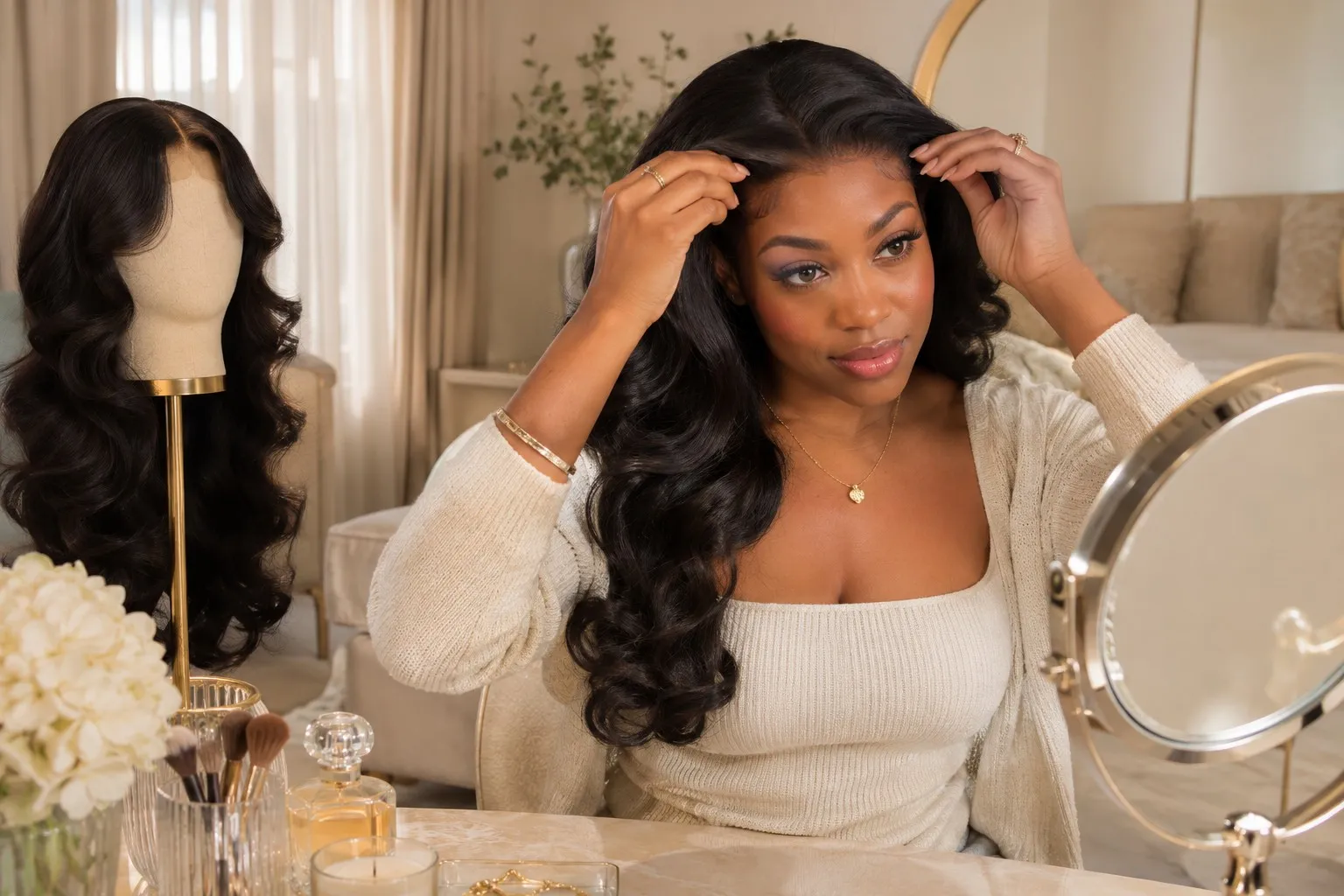
Last updated by Hairporium · November 1, 2026
To choose a wig, decide six things: the cap construction, human hair or synthetic, the density, a length and style for your face shape, the right cap size, and how much upkeep you can budget for. For a first wig, a glueless lace front or headband wig at medium density (130% to 150%), in a short-to-medium length, is the easiest place to start.
Below: each factor in turn, a table of every wig type, how to measure your head, and the mistakes that make a wig look like a wig. If you’d like one recommendation that weighs all of this at once, the Hairporium AI Stylist can build it with you.
Free download
A one-page checklist to find the style, cut and length that suit your face and your routine.
Check your inbox: your free hair plan is on its way. If it isn't there in five minutes, look in your spam or promotions folder.
Sorry, that didn't go through. Please check your email address and try again.
Most people start with color and length. Both matter, but they’re the finishing touches. These six factors decide whether a wig looks right, feels comfortable and fits your life:
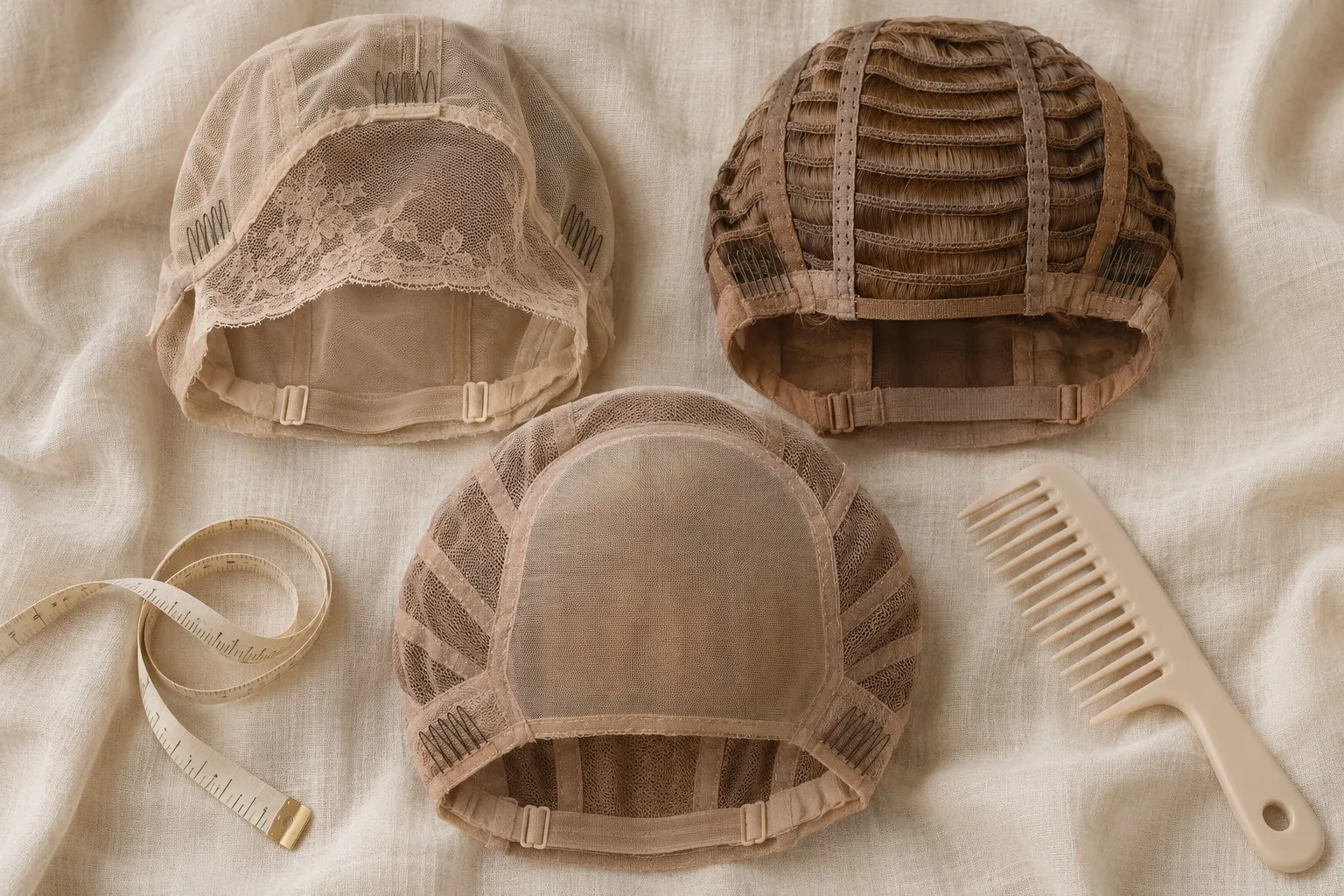
Every wig type has a purpose. Match it to how you’ll wear the wig, not just the price or the photo.
| Wig type | Hairline | Parting and styling | How it stays on | Best for | Cost |
|---|---|---|---|---|---|
| Lace front | Natural at the front | Part near the front; updos are limited | Adhesive or tape, or combs and an adjustable band | Everyday wear with a natural hairline | Mid |
| Full lace | Natural all the way around | Part anywhere; ponytails and buns | Adhesive, tape or combs | Changing your style often | Highest |
| Glueless | Usually a lace front | As a lace front | Combs and an adjustable band, no glue | First wigs and quick daily wear | Mid |
| Headband | Covered by the band | Set style | Built-in headband, no glue | Fastest on and off | Low to mid |
| Machine-wefted | Least natural | Set parting | Combs and adjustable straps | Smaller budgets; light and airy to wear | Lowest |
| Monofilament | Natural-looking scalp at the parting or crown | Part within the mono area | Combs and adjustable straps | A realistic parting and sensitive scalps | Mid to high |
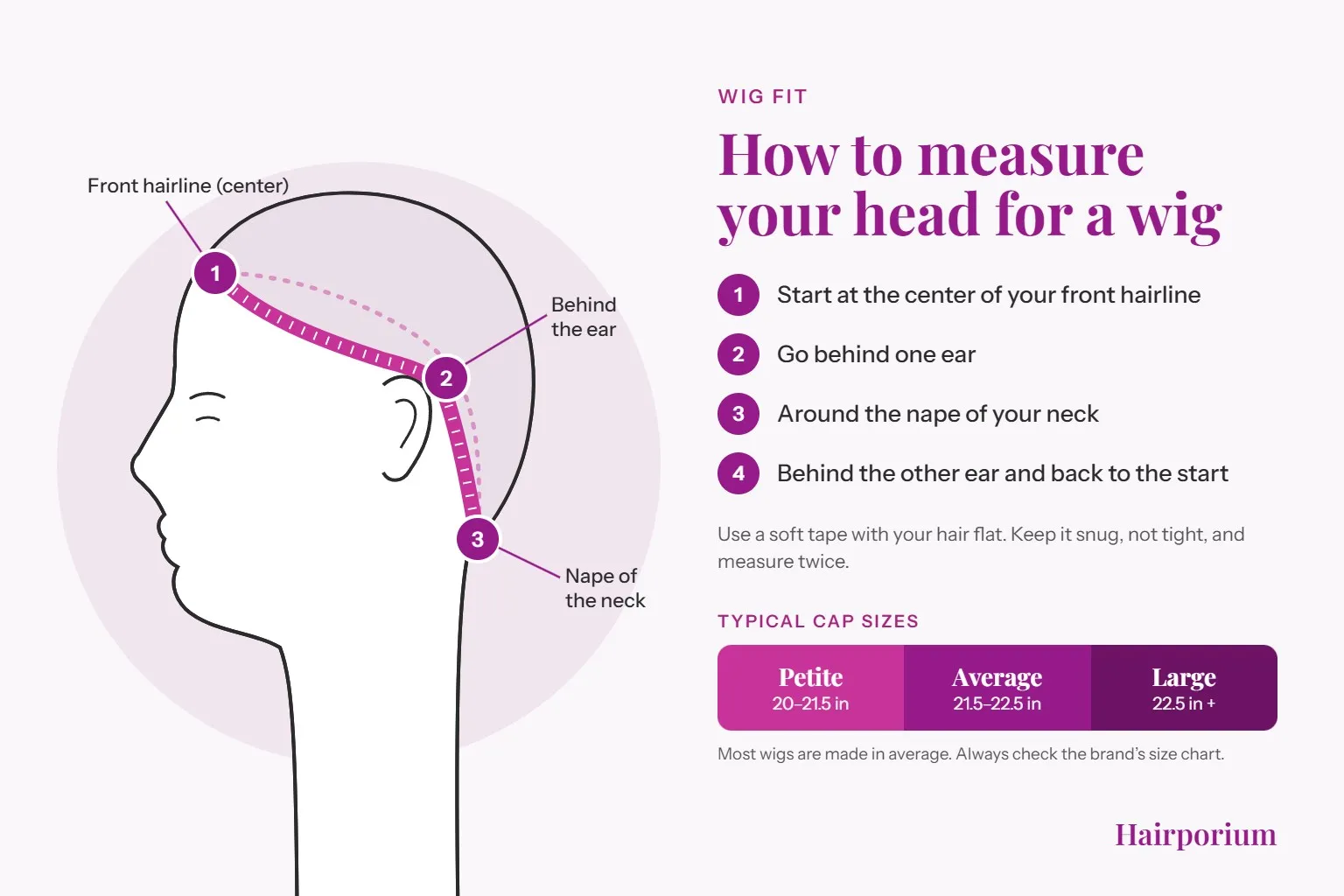
A wig that doesn’t fit will shift or pinch, however good it looks. Measure before you buy:
Our guide on how to choose a wig that looks natural covers each of these, and the best wig for beginners helps if this is your first.
A lace front or full lace wig in human hair, at a light-to-medium density (100% to 150%), looks most natural for most people. The hairline and density give a wig away faster than the fiber does.
A glueless lace front or headband wig in a short-to-medium length is the easiest to start with: no adhesive, quick to put on, and simple to look after. Synthetic keeps cost and upkeep down while you learn.
Choose human hair if you’ll wear it most days, want to heat style or color it, and want it to last more than a year. Choose synthetic if you want low effort, a set style and a smaller budget.
Medium density (130% to 150%) suits most people and looks natural for everyday wear. Go lighter for the most realistic look, or 180% and above for big volume.
Measure around your hairline with a soft tape, from the front, behind your ears and around the nape of your neck. Most wigs come in an average size of about 21.5 to 22.5 inches. Check the brand’s chart, and use the adjustable straps to fine-tune the fit.
With daily wear, a synthetic wig usually lasts about four to six months, and a human hair wig often more than a year. Gentle washing, a wig stand and less heat all help it last longer.
Free download
A one-page checklist to find the style, cut and length that suit your face and your routine.
Check your inbox: your free hair plan is on its way. If it isn't there in five minutes, look in your spam or promotions folder.
Sorry, that didn't go through. Please check your email address and try again.
The Hairporium AI Stylist asks the questions that matter — face shape, lifestyle, budget, scalp condition — and gives you a personalized wig recommendation. Free, with no sign-up to start.
Start your free hair consultation →