Hair Extensions
At first glance, clip-ins and tape-ins seem straightforward: clip-ins are for now, and tape-ins are for the long term. Yet, when you consider what it’s like to wear them day after day, and the upkeep and comfort of each, the choice isn’t so clear. Both will give you lovely length and fullness, and can look surprisingly natural when applied by a good stylist. But the differences show in how they’ll fit into your life.
Get Your Personalized Hair Plan →By the Hairporium Editorial Team · 9 May 2026
In this guide
The core differenceWhat daily use feels likeWhen clip-ins make more senseWhen tape-ins are the better fitComfort over timeCost and upkeepWhat people often get wrongWrap upFrequently asked questionsAnd this decision is a big one, because extensions aren’t just about how they look on day one; they affect your getting-ready time, how often you’re at the salon, and the health of your own hair as the weeks go by.
In this guide, we’ll explore the actual difference between clip-in and tape-in extensions, which suits whom, and how to pick based on, well, your actual life.
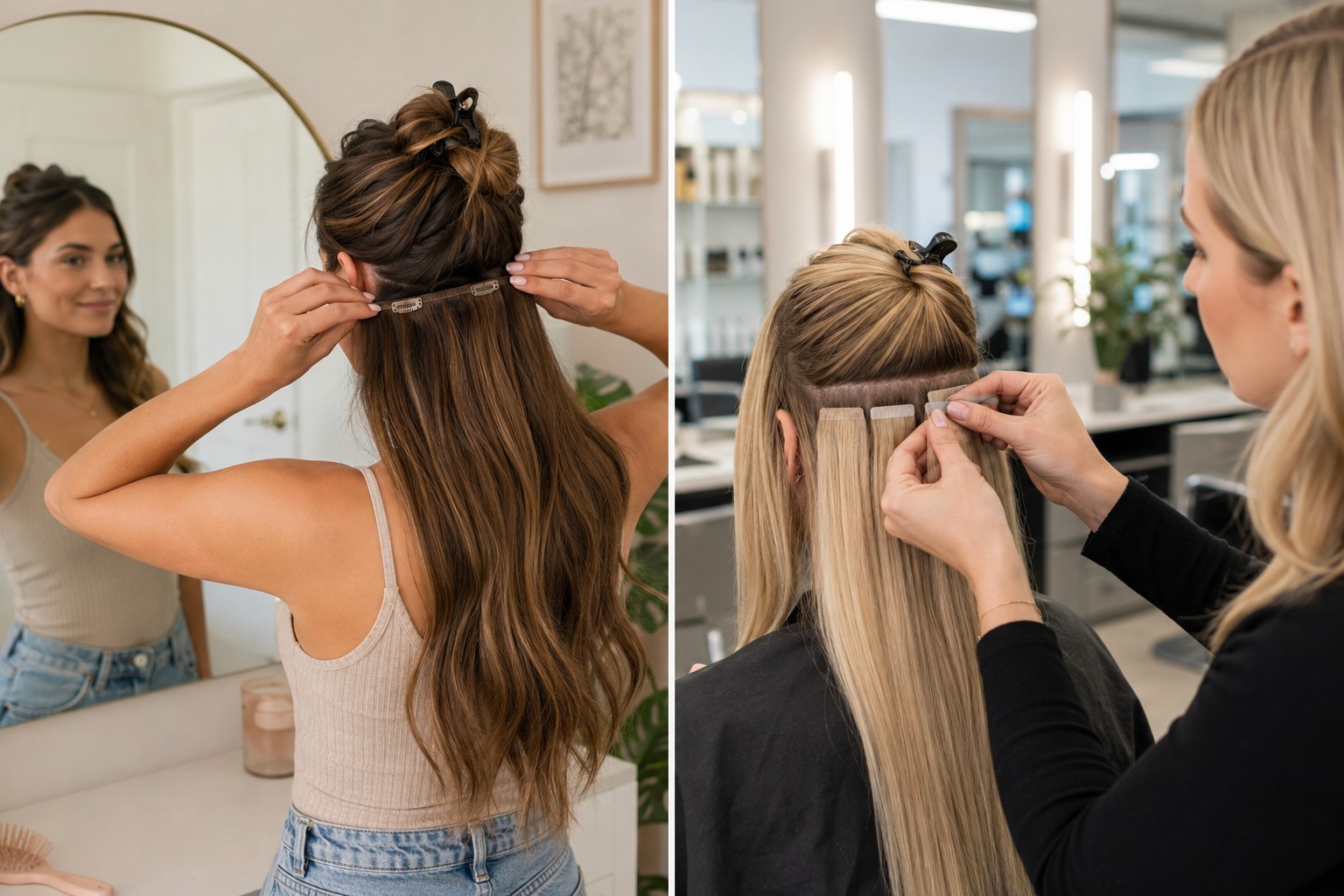
The biggest distinction between clip-in and tape-in extensions is the way they are attached to your hair, and this single point really shapes everything else. Clip-ins are made to be put in and taken out as you please. They have little clips that attach to your hair, and you simply remove them at the end of the day.
Tape-ins, however, are semi-permanent. Adhesive strips hold them in your hair for weeks, moving with your own hair, and they aren’t for daily removal. Because of that, clip-ins give you freedom, and tape-ins offer consistency. Neither is definitively ‘better,’ but they’re for very different lifestyles.
The most straightforward way to understand how they differ is to think about what using each one is like. Clip-ins? You’re in charge. You choose when to wear them, how much of them to use, and when to take them out. This makes them a perfect choice for extensions only on occasion, or if you don’t want to be committed for a long period.
Tape-ins, on the other hand, are always present. After being put in, they’re a part of your daily hair, not removed at night, and you style around them.
Clip-ins take a few minutes to add each time, while tape-ins remove that daily time commitment but do require trips to the salon for maintenance. Ultimately, it’s about whether you’d rather put in a little effort frequently or a longer-term commitment.
Clip-in extensions are typically the better option when flexibility is what you want. They’re ideal if you only need them for specific days or occasions, if you’d rather not sleep with them in, if you don’t want a salon installation, and if you like being able to decide when you’ll wear them.
They’re also a great place to start if you’re new to extensions. You can experiment with different lengths and volumes without a lasting commitment. And, because you remove them, they cause less constant tension on your hair, making them easier to manage for those who are careful with their hair’s health.
If you’re after a hairstyle that’s pretty much set and stays that way, tape-in extensions are probably the better solution. They’re good for you if you’d like extensions to stay in for a while, aren’t keen on putting them in every single day, like a really smooth and natural-looking blend, and are happy to go to the salon regularly for adjustments.
Because tape-ins are closer to your scalp, they’re harder to spot, which is brilliant if you wear your hair down a lot. And as the weight is spread throughout your hair, you can style it in more ways than with clip-ins.

How comfortable they are isn’t something you necessarily notice at first, but you will with wearing them. Clip-ins can feel a little heavier on your head while they’re in, though, as you take them out each night, this isn’t normally too bad.
Once tape-ins are in, they are lighter, as the weight is distributed, but you have them in all the time, so any discomfort will last longer if they aren’t put in correctly. Some people much prefer the temporary sensation of clip-ins, others the predictable experience of tape-ins. It’s really down to how you like your hair to feel on your head during the day and when you’re sleeping.
The price and the ongoing care are also important. Clip-ins are typically cheaper to start with and don’t involve continual salon visits. If you look after them, they can last a long time. Tape-ins are more expensive because a professional has to install them, and you need regular appointments to have them maintained.
Every few weeks, as your hair grows, they’ll need to be moved or put back in. And the care is different too. Clip-ins just need basic looking after and storing. Tape-ins need careful washing, brushing, and consistent maintenance to remain looking natural. So, clip-ins are easier to do yourself, but tape-ins need a lot more commitment.
A mistake lots of people make is getting tape-ins without thinking about the maintenance. They seem easy, but the upkeep can be a lot if you haven’t anticipated it. Another error is thinking clip-ins will feel completely as though they’re part of your hair in all situations. They’re best when used correctly, but they are a temporary fix.
Also, don’t base your choice on what’s fashionable. What’s good for someone else won’t necessarily suit your lifestyle. The best choice is one that fits how you actually wear your hair, not just how you’d like to.
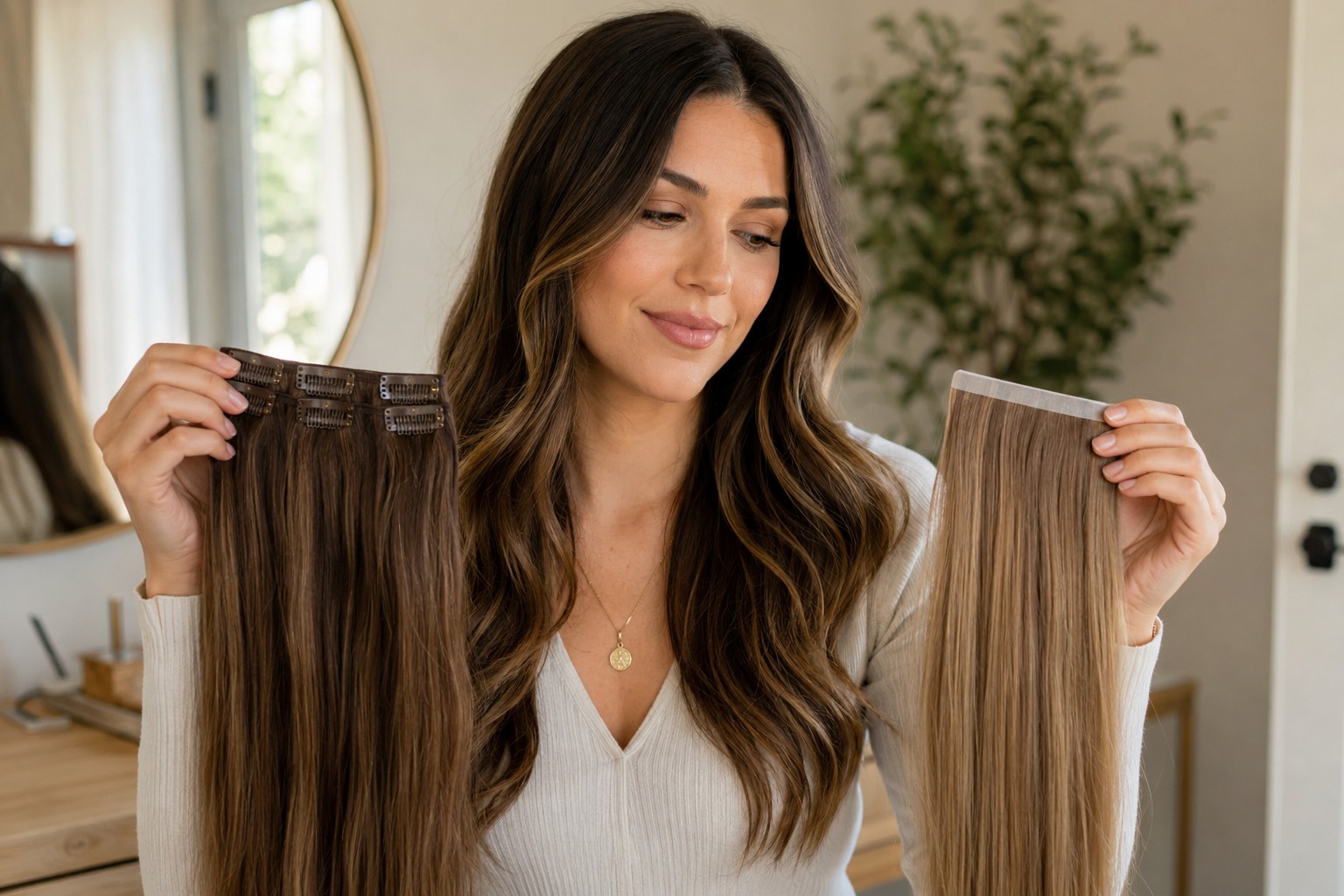
Ultimately, clip-ins versus tape-ins comes down to a choice between having the ability to change things up and having a consistent look. If you want to be in charge, spend less, and only wear them now and then, clip-ins are the way to go. But if you are looking for a blend that’s long-lasting and very natural, and aren’t fazed by regular salon trips, tape-ins are worth considering.
Once you think about your day-to-day, how much time you have, and how often you want to have extensions in, the answer will be a lot clearer.
The Hairporium AI Stylist factors in your hair type, lifestyle and budget to give you a personalised extension recommendation.
Find your style free →The core difference is how they attach. Clip-ins use small clips that you apply and remove daily — you control when you wear them. Tape-ins are semi-permanent, bonded with adhesive strips and worn continuously for weeks. Clip-ins offer flexibility; tape-ins offer a consistent, low-daily-effort look.
Generally yes. Clip-ins require no salon installation, no long-term commitment, and can be removed each night. They’re ideal for experimenting with length and volume before committing to something semi-permanent. Tape-ins are a better fit once you know what style suits you and are ready for regular maintenance appointments.
Tape-ins typically need moving up every four to eight weeks as your natural hair grows. At each appointment, the stylist removes the adhesive tabs, repositions them closer to the roots, and rebonds them. Skipping maintenance leads to the extensions growing out noticeably and the adhesive weakening over time.
Hairporium AI Stylist analyses your hair type, lifestyle and budget to recommend the best extension method for you. Free, no account needed.
Start your free AI hair consultation →Takes you to hairporium.ai — free, no sign-up required