Wig Guides
Glueless wigs stay on with an elastic band, combs or clips instead of adhesive. Here’s which type is easiest to start with, what to check before you buy, and how to put one on.
Get Your Personalized Hair Plan →Published by Hairporium · November 3, 2026

In this guide
Types at a glanceWhat to check before you buyBest types for beginnersHow to put one onKeeping it secureMistakes to avoidProtect your hairlineFAQThe best glueless wig for a beginner is a pre-cut 4x4 or 5x5 lace closure wig. Look for an adjustable elastic band and combs, a short to medium length, and 150% density. It goes on in minutes with no glue and no lace to cut, and the closed cap is forgiving while you learn. When you want a hairline you can wear swept back, step up to a glueless lace front.
Below: how the glueless types compare, what to check before you buy, the best types to start with, how to put one on, and the mistakes that make a wig slip or look obvious.
A glueless wig is held on by its own cap, not adhesive. An adjustable elastic band runs across the back, small combs or clips sit inside the cap, and some have a drawstring. Many are sold pre-cut and pre-plucked: the lace is trimmed and the hairline thinned for you, so there’s nothing to cut first. That makes them quicker to put on and easy to take off every night.
| Type | How it stays on | Hairline look | Ease for beginners | Best for |
|---|---|---|---|---|
| Headband wig | A built-in fabric headband, with combs or a grip band | Your own hairline or the headband frames your face | Easiest | Quick wear and giving your edges a rest |
| U-part or V-part wig | Clips and combs; your own hair blends in at the part | Your own hair at the part | Easy, if your texture matches the wig | People whose hair matches the wig’s texture |
| Pre-cut lace closure wig (4x4 or 5x5) | Elastic band and combs; lace only around the part | A natural part, with less room to move it | Easy | First-time wig wearers |
| Pre-cut glueless lace front (13x4 or 13x6) | Elastic band and combs; lace from ear to ear | The most natural, and can be swept back | Medium: the lace needs to sit flat and blend | Wearers ready for off-the-face styles |
| Full lace wig | Band and combs, often with glue for updos | Natural all round, including high ponytails | Hardest: fine lace tears easily | Experienced wearers |
Lace sizes are width by depth in inches, so a 5x5 closure gives you five inches of parting space each way.
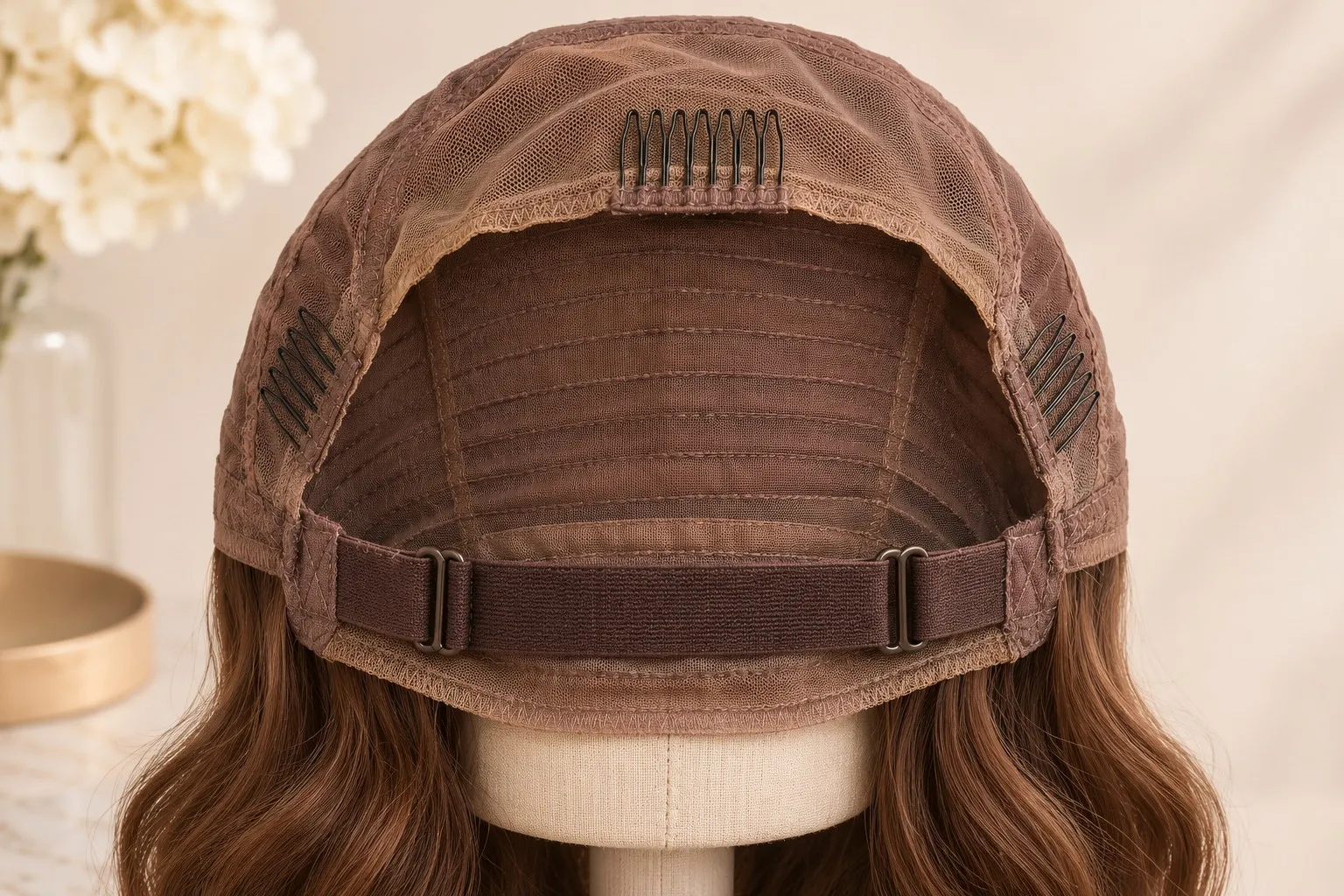
Hold off on full lace wigs and anything sold as “glue required” until you’ve had some practice. They take more skill to put on, and the lace tears easily. For the wider picture, see lace front vs full lace wigs and the best wig for beginners.
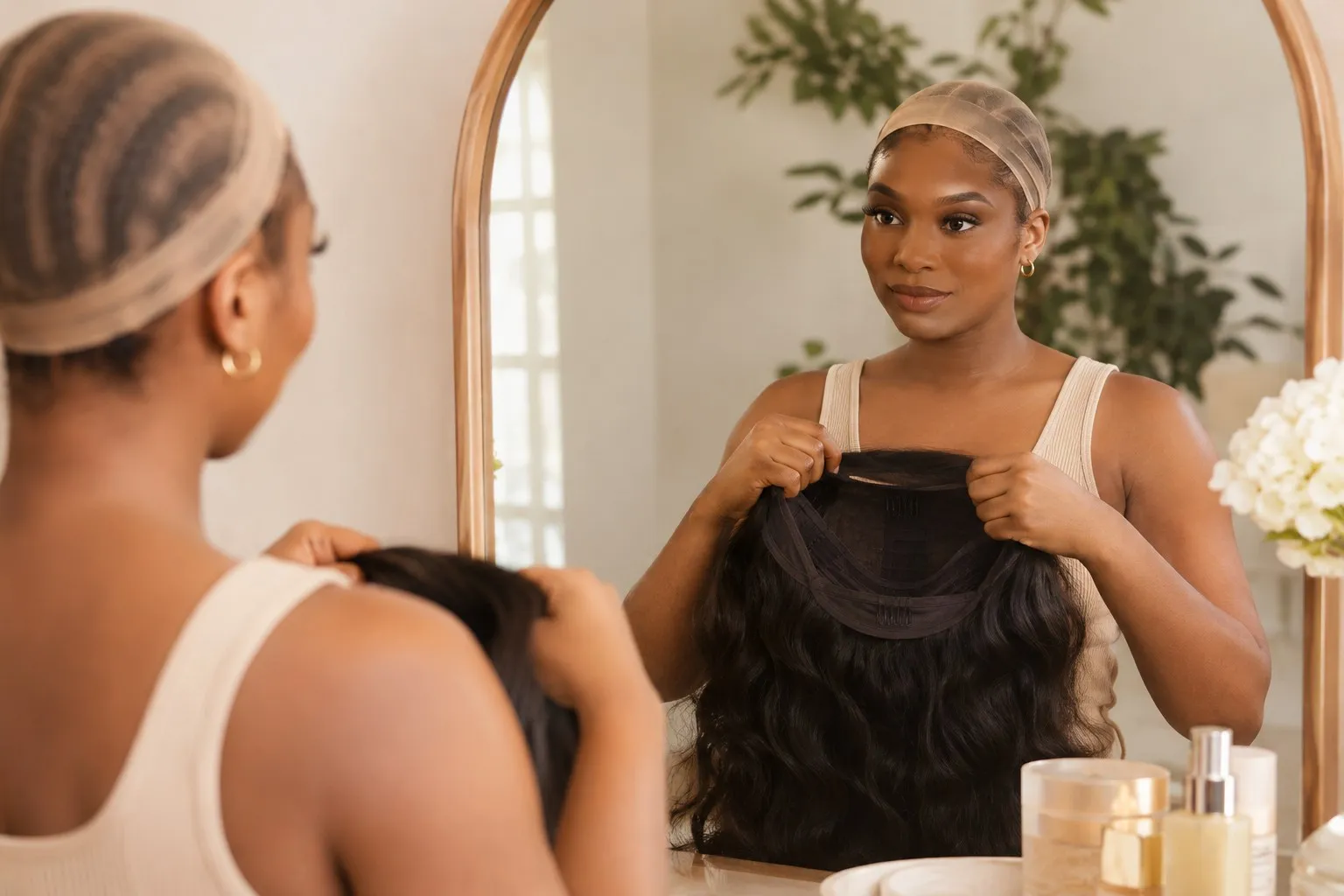
To take it off, release the combs from back to front, loosen the band, and lift the wig gently from the front.
Glueless doesn’t mean pressure-free. A tight band, tight braids underneath, or a wig worn day and night can pull on your hairline over time. Keep the band and braids loose and give your hair days off. If you notice soreness, broken hairs at the front, or a receding hairline, take a break and see a dermatologist early: hair loss from constant pulling can become permanent if it isn’t treated.
The Hairporium AI Stylist looks at your face shape, hair type and lifestyle to recommend wig styles and lengths that suit you.
Find your style free →A pre-cut 4x4 or 5x5 lace closure wig with an elastic band and combs. There’s no lace to cut and no glue, and the closed cap is forgiving while you learn. A headband wig is even quicker, but you can’t wear it off your face.
Yes, when the cap size is right. The elastic band and combs hold the wig in place. For extra security, add a wig grip band or a couple of bobby pins rather than pulling the band tighter.
It’s best not to. Take it off at night so your hair and scalp get a break, and keep the wig on a stand or in a satin bag.
Not if you wear them loosely. A band or braids that pull tight can stress your hairline over time. Keep both snug but comfortable, and give your hair days off.
Measure around your head from your front hairline, above your ears and around the nape. Most wigs come in a medium cap, about 22 to 22.75 inches; buy small or large if you fall outside that.
Synthetic is cheaper, lighter and comes pre-styled, which suits a first wig. Choose human hair if you want to heat-style it and keep it longer.
Hairporium AI Stylist analyzes your face shape and lifestyle to recommend the wig styles and lengths most likely to suit you.
Start your free AI hair consultation →Takes you to hairporium.ai. No sign-up to start; create a free account to see your preview.