Lifestyle Hair
Humidity changes your hair whether you're ready or not — straight styles wave, curls swell, and sleek looks lose their shape within minutes. The styles that survive aren't the ones that fight the weather; they're the ones that embrace a little texture and keep everything contained enough to still look good as your hair does its thing.
Get Your Personalized Hair Plan →By the Hairporium Editorial Team · 1 July 2026
In this guide
Why humidity affects your hairWhat makes a hairstyle work in humidityHairstyles that survive humidityWhat to steer clear ofA few easy helpersThroughout the dayTo sum upFrequently asked questions
The moment you walk outside, humidity seems to have it out for your hair! All that effort to style it, and within minutes it's shifting, expanding, becoming frizzy, or just losing its shape entirely.
Because of this, hair for humid weather requires a completely different mindset. It’s not about making your hair stay perfect, but about selecting styles that will still look good as your hair does what it’s going to do in response to the weather.
Lots of people try to battle the humidity with heavy products and lots of heat, yet that often just makes the problem worse. The more you try to control it, the more obvious the change becomes.
A far better plan is to go with your hair, not against it. This guide explores hairstyles that can survive humidity and explains why they're more realistic and easier to live with.
Humidity introduces moisture into the air, and your hair soaks it up. This little shift in the hair's structure is what happens when straight hair begins to wave, and waves or curls swell and frizz. It's perfectly normal, and it's why your style doesn't remain put.
Hair that’s naturally dry or porous is even more reactive, quickly absorbing moisture and making the change more obvious. That’s why incredibly smooth or rigidly structured looks don’t last long in humid air; the weather alters your hair, ready or not.
Not every style stands up well to humidity, but the ones that do tend to share some qualities: they don’t depend on flawless smoothness, they embrace a little texture and movement, and they manage to keep the hair contained enough that it won't balloon out too much.
Good humid-weather hairstyles are flexible; they don't fall apart with a slight shift in your hair, but instead continue to look natural. The aim isn’t to prevent your hair from changing, but to choose a style that looks good when it does.
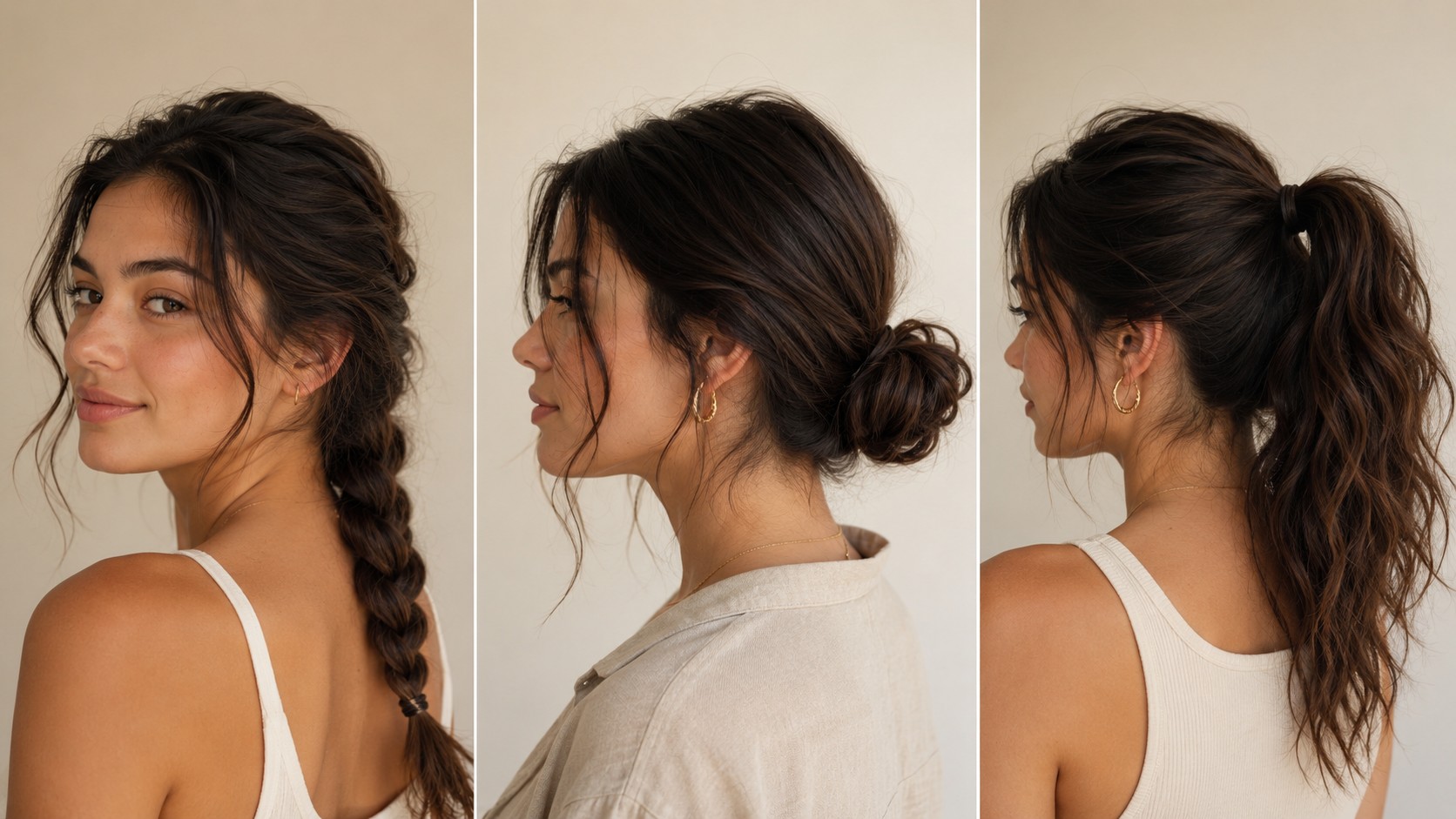
A low bun is wonderfully reliable, containing the hair and reducing how much of it is exposed to the air. Even if some bits come loose or frizz, the overall form stays tidy, which is why it's so great for humid weather.
Braids are among the simplest ways to manage your hair. They hold everything together, limiting the impact of the humidity - one single braid, or several, the structure keeps the style in place.
A textured ponytail is a better bet than a sleek one. It allows your natural texture to be visible instead of trying to smooth every strand, and any change from the humidity is less noticeable.
Loose Waves fare better than perfectly straight styles. Because they already have movement, small changes in texture don't shout out. They’re easier to maintain all day long.
A half-up, half-down style finds a balance between control and freedom. The hair on top is secured, while the rest flows naturally. Even if the bottom section shifts, the style as a whole still looks done.
Twists are a simple way to manage sections of hair, keeping things under control without needing a polished finish, making them a sensible choice for daily wear in humid conditions.
Some styles just don't survive humidity. Extremely sleek, straight styles are the hardest to maintain; as soon as your hair draws in moisture, they lose their smoothness. Loose styles lacking structure can quickly descend into messiness, reacting fully to the environment without any hold.
And too much heat styling is another issue, creating a temporary look that disappears once the humidity hits. Avoiding these will save you a lot of time and effort.
Even the best humidity-proof hairstyles need a little encouragement. Work with your natural texture instead of trying to change it, use lighter products instead of heavy ones, avoid overdoing the heat styling, and keep your style a little relaxed, not rigidly tight. These small changes help your hair remain manageable without endless fixing.
Humidity levels can change during the day, and your hair will likely shift a little.
The point isn't to have it remain perfect, but under control.
Styles that don't demand constant fixing are the easiest to live with.
If needed, a quick re-tie or smoothing of sections is enough; you shouldn't have to start all over. In fact, the less you think about your hair, the better the style functions.

Hairstyles that survive humidity aren't about completely eliminating frizz. They’re about choosing styles that continue to look good as your hair changes. Buns, braids, and textured styles succeed because they allow some movement, while still keeping everything reasonably contained.
The trick is to stop fighting the humidity and start collaborating with it. Do that, and your hair will be much easier to manage, even on the stickiest of days.
The Hairporium AI Stylist factors in your hair type, lifestyle and environment to recommend styles that actually hold up in your day-to-day.
Find your style free →Contained, structured styles do best — low buns, braids and twists keep hair held together so humidity has less to grab. Textured ponytails, loose waves and half-up half-down styles also work because they already embrace movement, so small changes in texture don't stand out.
Humidity adds moisture to the air and your hair absorbs it, which subtly changes the hair's structure — straight hair starts to wave, and waves or curls swell and frizz. Naturally dry or porous hair is even more reactive, which is why very smooth or rigid styles lose their shape quickly.
Extremely sleek, straight styles are the hardest to maintain — they lose their smoothness as soon as hair draws in moisture. Loose styles without any structure can quickly become messy, and heavy heat styling creates a temporary look that disappears once the humidity hits.
Not usually — heavy products and lots of heat often make the change more obvious. Lighter products, working with your natural texture, and keeping styles a little relaxed rather than rigidly tight help hair stay manageable without endless fixing.
A quick re-tie or smoothing of loose sections is usually enough — you shouldn't need to start over. Styles like buns, braids and textured looks are forgiving because their overall shape stays tidy even when a few strands shift or frizz.
Hairporium AI Stylist analyses your hair type, lifestyle and environment to recommend styles that hold up in the real world. Free, no account needed.
Start your free AI hair consultation →Takes you to hairporium.ai — free, no sign-up required