Most of us pick a hairstyle because we like the look of it, and that’s usually where things begin to fall apart. Something might be stunning initially, but if it doesn't mesh with what you do every day, it won't stick.
Last updated by Hairporium · 24 May 2026
In this guide
Why Lifestyle Should Drive Your ChoiceThe Lifestyle-First FrameworkHairstyles for Busy ProfessionalsWhat Busy Professionals NeedBest Hairstyle TypesWhat to AvoidBest Gym-Compatible StylesTravel-Friendly HairstylesHumid & Extreme ClimatesClimate-Resistant StylesLow-Maintenance HairstylesWhat Makes a Style Low-MaintenanceMatching to Your Real LifeDecision ChecklistCommon MistakesTesting Before CommittingEvolving Your HairstyleTransitioning Between LifestylesFrequently Asked QuestionsSimply put, whether a hairstyle succeeds or fails depends on how you actually live. Because of this, choosing a hairstyle based on your lifestyle is much more important than following whatever's trendy.
This is a guide to finding styles that genuinely fit into your day-to-day, whether you’re a professional with a lot on your plate, someone who spends a lot of time at the gym, a frequent traveler, battling the humidity, or just want something that doesn't require a ton of upkeep.
The intention isn't to copy the popular looks, but to discover something that will look good for the long haul. When your hair works with your life, you'll get reliable, easily repeated, and consistently good results.
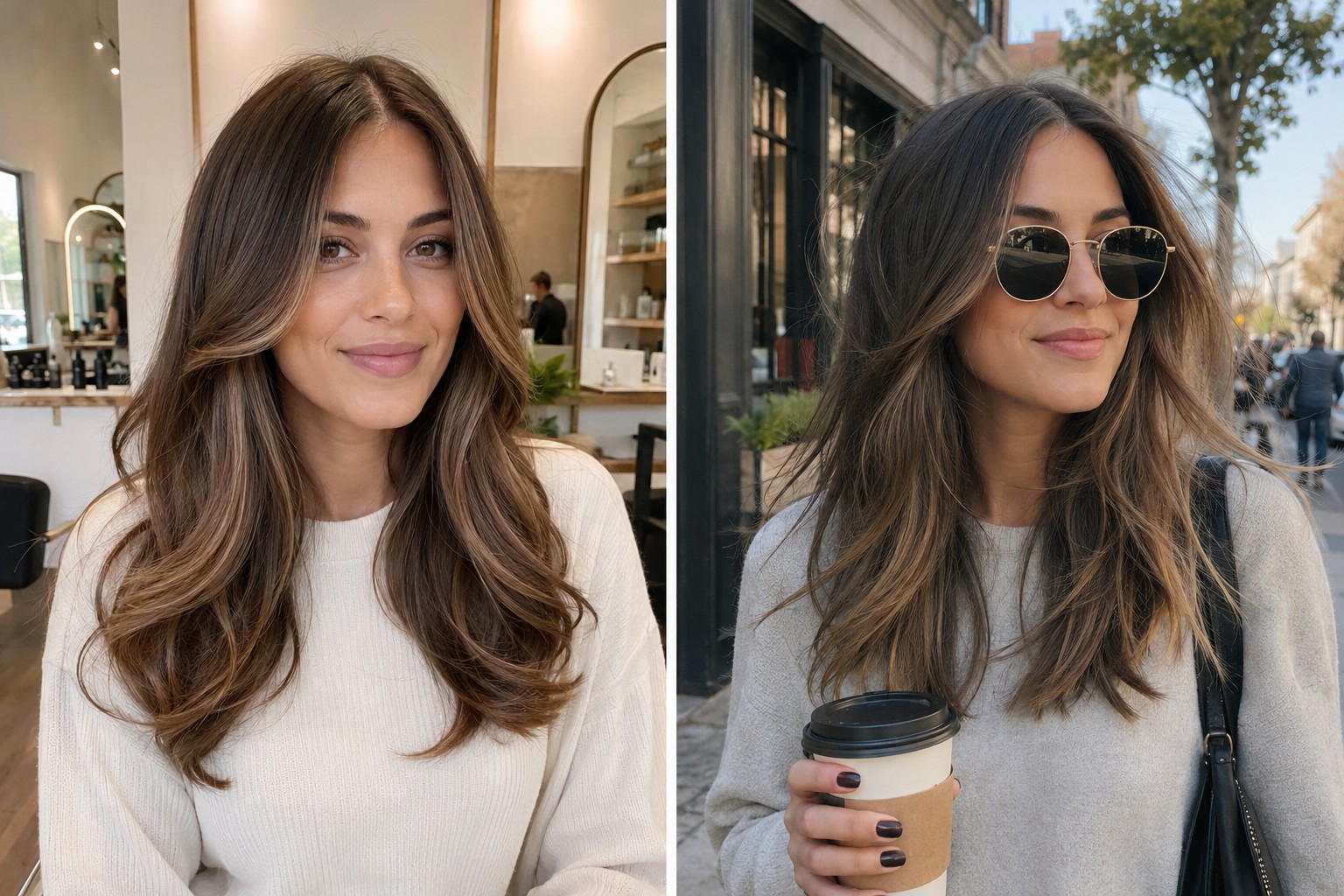
A hairstyle isn't just about how it appears; it’s about how it behaves as you go about your day. What looks absolutely perfect in the mirror or in a picture will often fall apart when faced with your normal routine. And that’s why selecting a style according to your lifestyle will give you much better, more predictable outcomes than going on looks alone.
There's a real chasm between a great appearance and something that actually functions in everyday life. A hairstyle might seem polished and effortless in a photograph, but that perfect finish usually happens with special lighting, a stylist's touch, and very little movement.
In reality, your hair has to deal with being short on time, the weather, and your activities. This is where many styles give up. A shape that holds at the salon may not make it through a workday and your commute.
And social media just widens that gap. Those platforms are full of idealized hairstyles that aren't representative of how they’ll look with daily wear, and they very rarely show you how much work is needed to achieve and keep that look.
How much styling you need to do is another thing to think about. If a hairstyle only looks good after you’ve used hot tools or loads of products, it's going to be difficult to maintain. Eventually, you'll start to put in less effort, and the look will go with it.
There's a hidden cost to every hairstyle, even if you don't realize it at the start. And the biggest part of that cost is time. Styles needing daily styling, re-shaping, or quick fixes demand more than most of us can manage.
Using lots of products is another layer. Some styles depend heavily on multiple products to hold their shape or manage the texture. This adds to the expense and makes your routine more complicated.
And don't forget how often you'll need to go to the salon. Some cuts and styles need regular maintenance to keep their form. If you can't manage those appointments, the style will soon lose the look it was meant to have.
When you don't consider these things beforehand, the style will be difficult to maintain and will eventually fail.
When your lifestyle and hairstyle are at odds, that’s when trouble starts. If you’re a regular at the gym, sweat and movement will mess up styles that need to be precise. Something lovely in the morning won't necessarily survive your workout.
Your work life can also be a problem. If you’re incredibly busy, there's just no time for complicated styling. A look that requires a lot of effort will be inconsistent because you won't have the time.
And the climate has a say too. Humidity can cause frizz and a loss of shape, whilst dry weather can lead to breakage. A style that works in one location might not work in another. Okay, so this is why we’ve got to change how we pick our hairstyles. It’s much more sensible to start with how you actually live your life, and then find a style that’s a good fit for that.
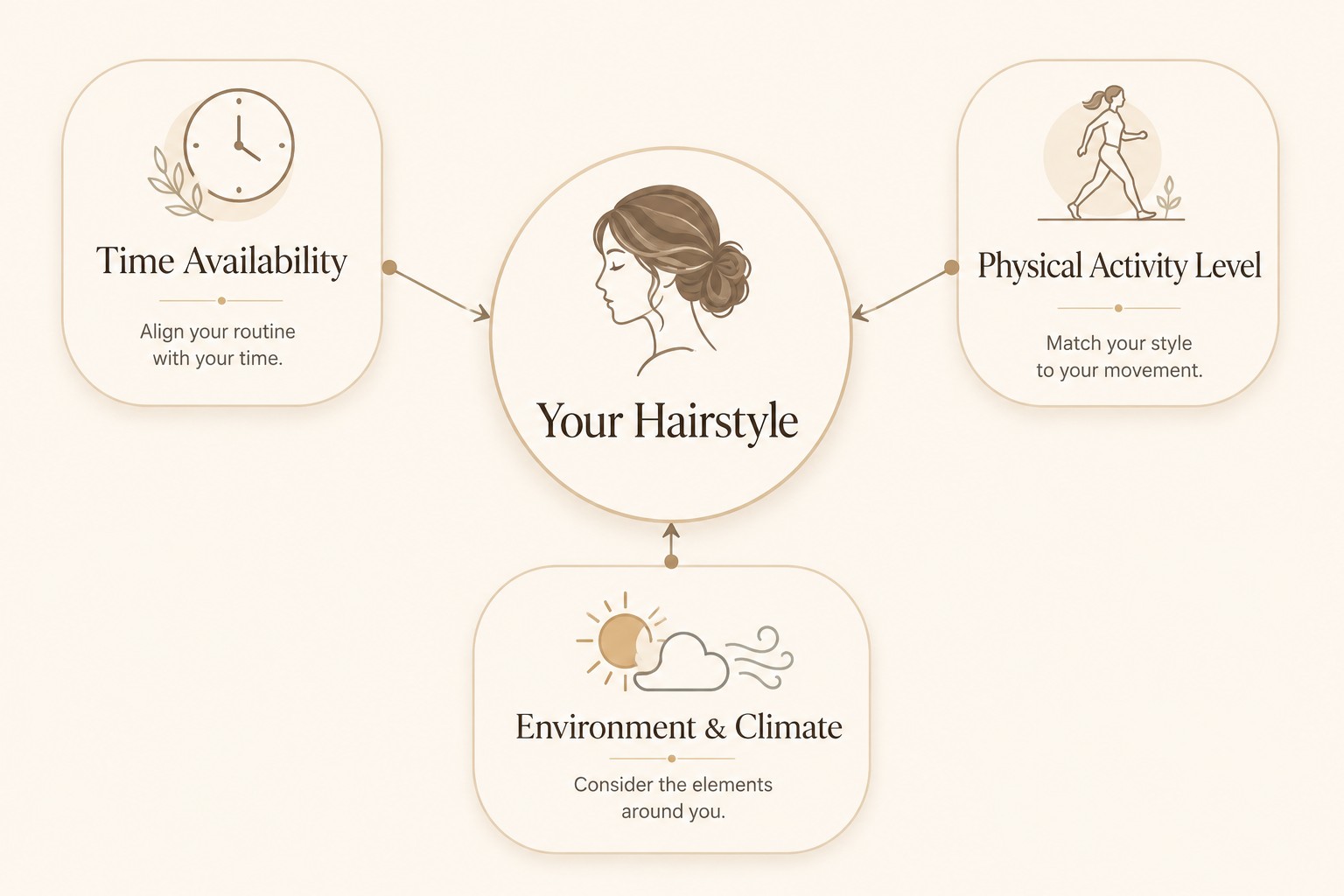
This 'Lifestyle First' way of deciding on hair is about turning that usual process on its head. Most of us decide on a hairstyle, and then try to make it work with what we do. That's where things fall apart. This other way builds your choice around what you're realistically able to manage, so it will actually stay looking good. And that’s how a hairstyle tied to your lifestyle becomes something you can do, not just something you wish you could.
Firstly, and most importantly, is how much time you have. How long you have to style your hair each day is the main thing that will decide if a style is going to work. If you’ve only got a few minutes in the morning, anything complicated, needing hot appliances, or lots of stages, will quickly become unreliable.
And what about mornings versus evenings? Some of us like to get as much done as possible at night, and then barely touch our hair in the morning. Others prefer to style it fresh each day. Your routine needs to go with your natural rhythm, not against it.
A huge error is planning around the amount of time you think you’ll have, rather than the time you genuinely do. You might intend to spend half an hour doing your hair every day, but let's be honest, that's not often the reality. When a style needs time you don't reliably have, it will fail. The idea is to find something that suits the amount of time you're going to realistically spend on it each day.
Secondly, consider how physically active you are. How much you do impacts how long your hair will remain styled. Sweat, moving around, rubbing…all these things affect the shape, particularly for styles that need to be smooth or to hold.
If you work out regularly, your hair will be exposed to sweat and constantly moved. Styles needing a very specific shape or lots of product won't last.
Being active also tests how durable your hair is. The more you move, the more your hair needs to cope with that movement without falling apart. Styles that are looser, or more natural, generally do better with an active life as they aren't based on being precise.
The question to ask isn't what looks best at first, but how long it will continue to look okay after a whole day of doing stuff?
This makes sure your style survives your day, and not just the moment you look in the mirror.
And finally, think about where you are and the weather. Your surroundings influence how your hair behaves throughout the day. Humidity puts moisture in the air, causing frizz and the loss of shape, especially in hair that’s curly or easily absorbs water. Heat and dry air, on the other hand, take moisture out, leading to hair becoming brittle and snapping.
The climate dictates what products you'll need and how stable your style will be. Something that works in dry weather may completely collapse in humid conditions. Ignoring this means even a good routine will give you inconsistent results.
And if you travel, that adds another problem. Changes in weather, the water, your usual routine all these things will mess with even well-maintained styles. A style that's very reliant on specific conditions won't be very adaptable.
Because of all this, your environment needs to be included in your decision. If you think about the climate from the start, you'll choose styles that stay consistent no matter what the weather's doing.

Because workdays are full of repeating tasks, deadlines, meetings and a lack of time, your hair should fit with how you live, not get in the way. Instead of choosing a style for when it just happens to look good, think about what will actually stay looking good all day long without you doing much to it.
Busy people at work need hair that is fast to do and easy to repeat. Mornings are almost always hectic, so your hair routine has to be quick. Anything with lots of steps or that needs careful shaping is going to be hard to do regularly.
And looking neat and polished is just as important. Many workplaces need a certain level of order, and your hair should fall into place naturally, without you having to fiddle with it all the time. It should appear deliberate, even if you barely touched it. It should, crucially, hold that look all day without you needing to fix it constantly - all that adjusting breaks your concentration and adds to the stress of the day. Ideally, you want to look put together in minutes, and then for that to be it.
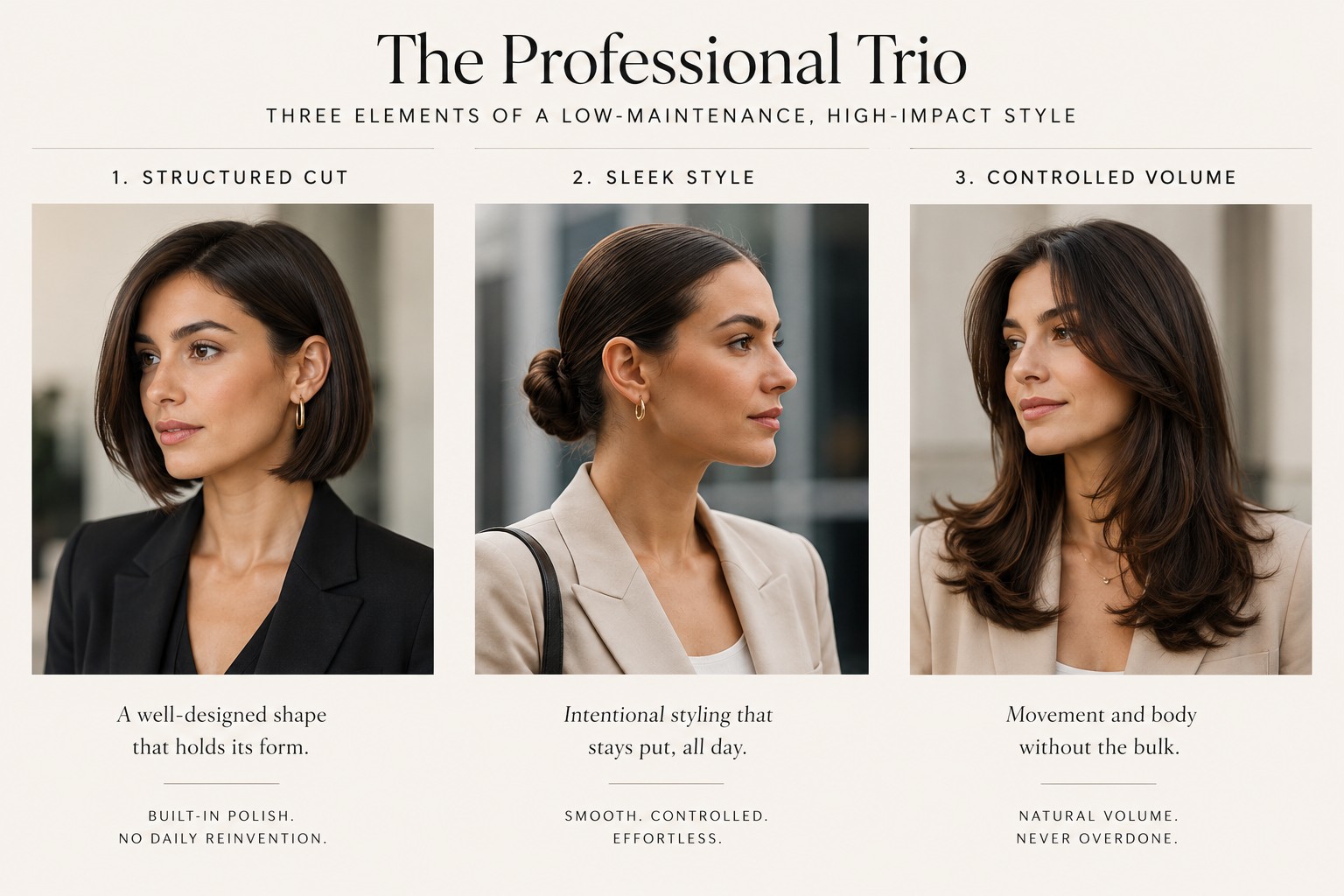
What hairstyles are best? Well-structured haircuts are a really good shout. They're designed to keep their shape as they grow, meaning you won't have to style them as much. The shape is in the cut itself; you don't need to recreate it each morning.
Sleek styles are good too, because they are about control, not a lot of fluff. Hair that is smooth and lies close to your head is easier to manage, isn't disturbed as much by moving around, and won't need a lot of readjustment once it's set.
And then there's controlled volume - a subtle shape that doesn't change much, giving fullness without being a handful.
They all have something in common: they take the thinking out of your hair. You aren't trying to decide what to do with it each day; the shape is already there.
What should you steer clear of? High-maintenance textures are tricky with a busy life. Styles that need lots of reshaping, or a ton of product, will likely fall flat when you don't have long.
Daily heat styling is another issue. It can look good initially, but it adds time, can be unpredictable when you're rushing, and will eventually damage your hair, creating even more work.
And anything that relies on being absolutely perfect... well, that's risky. If it only looks good when it's flawlessly done, it won't survive real life. Little imperfections will show; without time to fix them, the whole thing will look off. Avoiding these styles just makes things easier and more predictable.
To keep things on track, a simple maintenance plan is all you need. A weekly 'reset' - washing, conditioning, and a little bit of tidying up - will keep the shape and prevent product from building up.
And your day-to-day effort should be kept to a minimum. You want to keep your hair looking good, not completely do it over. When your haircut fits how you live, it’s something you sort of deal with, and it isn't constantly needing fixing.
For hair when you’re at the gym...well, if you’re sweaty and moving, your hair needs to cope. What you do with your hair when you're active is really important because a regular gym session pretty much destroys most normal styles. How it looks when you start isn't the point; it’s how it manages to stay looking okay after you move, sweat, and it rubs against things.
Most normal hairstyles just aren't made for exercise. Sweat breaks down all the products you use, and your hair loses its shape quickly. Particularly smooth or slicked-back looks, as even a little bit of dampness messes with how they’re put together.
And then you get frizz, plus oil building up. When sweat and your hair’s natural oils get together, your hair is harder to control. Styles needing a lot of careful doing or smoothness are the first to fall apart, and your hair looks all over the place.
Basically, the problem is they don't match up: these styles are for sitting around, not being active, and when you introduce movement, they fail.
The Hairporium AI Stylist considers your lifestyle, face shape and hair type to recommend a style that genuinely works for how you live. Free, no account needed.
Get my lifestyle hairstyle →

The most reliable gym styles are those that hold your hair in place. Controlling and containing your hair cuts down on rubbing and keeps it from getting messed up. They’re better at surviving because they’re designed to stay.
Styles that work with your hair’s texture do really well too. Instead of battling its natural movement, they go with it. Hair that already has a shape doesn't need endless adjustments after you've been working out.
And wash-and-go styles are a good bet. They depend on being simple and falling naturally, not a lot of effort. Because they aren't about perfection, they bounce back after a workout. The aim is to have a style that lasts. It doesn't need to be flawless, just presentable after your workout.
And afterward? Recovery is as important as the style itself. Don't totally redo your hair after every session. Just freshen it up - quick little adjustments are quicker, and you can keep doing them.
Looking after your scalp is the main thing. Sweat building up can affect how clean it is and how well your style holds. Just letting your scalp breathe or doing a quick, light refresh will help keep everything in balance.
The goal is to be efficient. A gym style should need very little fixing after your workout, and you can get on with your day.

When you're traveling, your hair is going to be faced with all sorts of surprises - your style has to be able to adjust. Hairstyles suited to your life become crucial because of changing places and not having everything you’re used to, to make sure your hair is manageable without needing things to be just right.
Things that are stressful for your hair on a trip include the fact that water can be very different wherever you are, and that affects how your hair behaves when you wash it. Hard water, for instance, can leave hair feeling dry and difficult to manage.
Climate change is also a cause of inconsistency. Going between humid and dry places changes texture, how much volume you have, and moisture. Styles needing everything to stay the same often struggle.
And you might not have all your usual tools. You may not have your normal products or anything to style it with, so your hairstyle needs to not rely on many things.
Travel throws things at you that you can't do anything about. Your hairstyle needs to be able to handle that.
For travel, protective styles are fantastic because they shield your hair from the stresses of being in a new place, and they keep things neat with very little daily fuss.
Styles that don't need specific tools or products are also a good bet, as they’re easier to manage wherever you are.
And, especially useful are styles that are flexible enough to be tweaked a little as needed, without a total redo. The whole point is to have a style that bends with the changes, rather than breaking.
To make travel even smoother, keep your hair routine as simple as possible. Less product means less to carry and fewer to do.
Instead of lots of different things, concentrate on products that do several jobs at once. Multi-use products are lifesavers, keeping your hair looking good without overcomplicating things.
Ultimately, you want a style and a simple way to keep it up so your hair is manageable on your trip, and doesn't add to your stress.

Climate really can ruin a good hairstyle. Without thinking about the weather, it's hard to be sure how it will turn out. In fact, when choosing a style to suit your lifestyle, the climate has to be a major part of the decision.
Humidity dumps lots of extra moisture into the air, making hair swell up and lose its style. Frizz becomes much more obvious, particularly with curly or porous hair.
Styles that depend on being sleek or perfectly in place suffer the most; even a beautifully styled head of hair can fall flat in just a few hours. With humidity, you need to manage the moisture, not try to fight it.
Dry climates, on the other hand, strip hair of moisture, making it brittle and likely to snap. It can feel rough and be difficult to arrange.
And because it lacks moisture, it’s also less flexible and styles won't hold as well, leading to more damage over time.
In dry weather, keeping hair hydrated is the most important thing.
Styles with a defined texture hold up better in all types of weather because they allow your hair to move naturally without completely losing its shape. They don't rely on everything being just right.
Protective styles also cut down on how much the weather affects your hair, helping it to stay consistent.
Styles that seal in moisture are great in dry climates, helping your hair to stay hydrated and avoiding damage.
The aim is for something that always performs, regardless of the weather

"Low maintenance" isn't about being lazy, it's about being clever. Choosing the right hairstyle for your lifestyle can minimize effort and still give consistent results. A low-maintenance style should look good as it grows, needing very few adjustments to stay presentable. It also shouldn't need a lot of styling.
If a style needs a lot of work every day, it’s going to be hard to keep up. The style itself should maintain its shape without you constantly fiddling with it. The idea is it should easily fit into your life.
A low-maintenance style should look good as it grows, needing very few adjustments to stay presentable.
It also shouldn't need a lot of styling. If a style needs a lot of work every day, it’s going to be hard to keep up. The style itself should maintain its shape without you constantly fiddling with it. The idea is that it should easily fit into your life.
Naturally textured styles work with your hair's natural curl pattern, so you don't have to do as much to it.
A cut with a good structure gives your hair a built-in shape, so it falls nicely without you doing anything.
Protective styles reduce how often you have to deal with your hair day to day, keeping it consistent over time.
These choices mean you won't be making constant decisions about your hair, making your routine much simpler.
Small styling tricks help you look presentable without completely restyling. Little changes are better than long, complicated routines.
Using fewer products also helps with consistency. Less to choose from means less confusion and an easier routine. The goal is to be simple, and a streamlined approach will give you better results in the long run.
In-depth guides for every lifestyle-based hairstyle decision.

The best hairstyle is one that will withstand your daily life. Hairstyles chosen with your lifestyle in mind mean your choice matches how you actually live, not how you think you will.
Your hairstyle should be about work, how active you are, and the climate. All these things work together and influence your hair. If you ignore even one of them, things can go wrong. A style that's great in one situation might not work in another. It's not just one decision; it's many things at once.
Problems happen when your hairstyle clashes with your routine. A style that requires a lot of work and a busy life is bound to be inconsistent. When things don't fit, it causes frustration, and the more effort a style needs, the less likely you are to keep it up. When things are aligned, that frustration disappears, and you get better results.
Before you choose a style, think about:
how much time you have
how much effort you're willing to put in
the weather
how good you are at doing your hair
This makes sure your choice is practical, not just something you like the look of.
Most mistakes when choosing a hairstyle happen because people don't think about the realities of their life, not because they've chosen a 'bad' style. They don't necessarily choose a bad hairstyle; they choose one that doesn't fit how they actually live. Without thinking about time, effort, and the weather, even a pretty style can quickly become hard to maintain.
Focusing only on how a hairstyle looks leads to unrealistic hopes. It might look fantastic at first, especially in photos or after a professional has styled it, but that doesn't mean it will look good all day. Lighting, a professional's touch, and a controlled environment create a perfect image that is hard to copy.
In real life, your hair has to deal with being moved, the weather, and the amount of time you have. If a hairstyle needs everything to be perfect to look good, it won't hold its shape. This leads to disappointment because it never looks as good as you'd hoped.
Every hairstyle requires some effort, whether it’s styling it every day, using products, or regular trips to the salon. If you don't consider this effort, it's hard to be consistent. A style that looks simple may actually need a lot of ongoing work to keep its shape and finish.
When it needs too much work, your routine is likely to become irregular. You might skip steps, rush the styling, or not bother maintaining it at all. Over time, this leads to unpredictable results and annoyance.
Your life isn't a photograph; it moves. Work changes, how much you're doing fluctuates, and where you are is always different. Selecting a hairstyle without thinking about how it’ll adapt to all that can lead to trouble down the line.
A look you love right now might be a headache later; without a bit of give, you'll be endlessly touching it up or completely starting over. Making sure a style will change with your life means it will still look good as your life does.

Most people don't go wrong with picking a hairstyle; it's jumping in with both feet too soon. It might sound good in your head, but until you've tried it with what you actually do, you’re still guessing. It’s much better to think of choosing a hairstyle as something you prove will work, before you’re totally committed.
Don't judge a hairstyle on first impressions. Try it out for a few days and see how it behaves. The first day it’s styled will probably look good, of course, but what happens after is what’s important.
How does it fare with your normal day? Does it lose its shape by lunchtime? Does it need lots of fiddling with? A style that only looks good immediately after you’ve done it is not something you can rely on.
This short test shows if the hairstyle can actually deal with what you get up to - not just a perfect, controlled situation.
Testing a hairstyle is also about how much work you have to put in for how good it looks. Some styles look fantastic, but need a huge amount of time and energy to keep them that way.
Ask yourself:
how long does it take to actually get it looking right?
how often will you have to fix it?
is the end result worth all the effort?
If it's a lot of work, even in this short test period, it’s not going to be something you can stick with. A style that's going to work for you should feel easy to manage, not like another thing on your to-do list.
Put your hairstyle through its paces in the situations where you really push it. Wear it to the gym, during a long day at work, or in bad weather.
If it falls apart when things get tough, it’s not a good match. A resilient hairstyle should fade slowly, not just completely collapse.
Lots of people skip this step, and that’s why they’re disappointed with a new style – they’ve only seen it when everything is going perfectly.
After testing, you should know for sure:
does it stay looking good all day?
can you keep it up regularly?
and does it fit into your life without being a pain?
If you’re saying “no” to any of those, you aren't ready to decide. You're not trying to make a style work; you're making sure it already does.
Testing gets rid of the uncertainty. You won't be hoping a hairstyle suits your life; you’ll know it does.
Your life won't remain consistent, so your hairstyle shouldn't be stuck in time either. What looks good during one period of your life might not suit you when your routine shifts. The trick isn't one demolition and rebuild, but to gently change your hairstyle.
People tend to keep a hairstyle for too long. The signs are subtle to begin with - you're spending more time fixing it, having more bad hair days, or just feeling generally irritated with it.
When a style suddenly needs a lot more attention, it's usually because your life has altered. Perhaps your schedule is fuller, you’re more active, or you’re in a different place.
Ignoring these clues leads to a style that’s all over the place. Spotting them early means you can tweak things before the whole thing falls apart.
You don't need a total transformation to change your hairstyle. Often, small adjustments will be enough.
This could mean:
shortening it to be easier to look after
changing the way it’s cut to hold its shape better
or working with your hair’s natural texture
These tweaks keep the essence of the style, while making it more sensible for what you’re doing now. And the advantage? You keep your look, you just make it a little more you.

Big changes in your life will need more obvious changes to your hair. If you're getting much more active, traveling a lot, or changing jobs, these will all affect your hair.
Instead of waiting for problems to happen, think ahead. Choose styles that can cope with the new demands before they become an issue.
This thoughtful approach prevents things from going wrong. Your hairstyle will move with your life, instead of being left behind.
The best way to go is to think about how easily a hairstyle can adapt, not to have a fixed look. A flexible hairstyle will change with little adjustments, instead of being completely reinvented all the time.
This means choosing styles that:
work in different situations
don't need everything to be just right
and can be altered without a full overhaul
When your hairstyle is flexible, you won't constantly have to rethink it whenever life throws something new at you. Instead of endlessly pursuing the latest trends, you end up with something that grows with you and looks good for a long time.
Most hairstyle choices don't fail because the styles themselves are bad, but because of how you choose them. Picking something just on how it looks makes for a quick win that won't last. When you choose by lifestyle, you stop worrying about how it looks and focus on how it works*, day in and day out.
And that’s where consistency comes in. A hairstyle that suits your routine won't need endless fixing, worrying over, or replacing. It works with your time, your activity, and your surroundings, and is therefore easier to manage without a huge amount of effort.
The aim isn't to find the "perfect" style, but one that just...keeps on working. When your hair suits how you live, the results are predictable, easy to handle, and much more dependable as time goes on.
Start with time, activity level, and climate before looks. The lifestyle-first framework narrows your options to what actually works day-to-day — instead of choosing a style and trying to make your life fit around it, build the choice around the time you genuinely have, how active you are, and the weather you live in.
Well-structured cuts, sleek styles, and controlled volume — anything that holds its shape and takes the daily thinking out of hair. The shape lives in the cut itself so you don’t need to recreate it each morning. Avoid styles that need daily heat styling, lots of products, or rely on being absolutely perfect to look good.
Styles that contain and hold hair in place, work with your natural texture, and need minimal post-workout fixing. Wash-and-go styles also do well — they don’t depend on perfection, so they bounce back. Focus on a quick post-gym freshen-up rather than a full restyle after every session.
Protective styles, looks that don’t depend on specific tools, and flexible styles that adjust without a full redo. Travel throws hard water, climate swings, and missing products at you — your hairstyle needs to bend rather than break. Keep your routine simple and use multi-purpose products to cut down on what you carry.
One that holds its shape as it grows, needs little daily styling, and doesn’t rely on multiple products or constant salon visits. Naturally textured styles, structured cuts, and protective styles all reduce daily effort. Low-maintenance isn’t about being lazy — it’s about being clever and choosing a style that fits your life without constant upkeep.
Continue exploring the other Hairporium guides covering hairstyle decisions, wigs, extensions, maintenance, hair problems, and our decision engine.
What Hairstyle Suits Me?How to Choose the Right WigHow to Choose Hair ExtensionsHair Maintenance GuideHair Problems GuideHair Decision EngineThe Hairporium AI Stylist considers your lifestyle, face shape and hair type to give you a recommendation that looks good and actually works. Free, no account needed.
✓ Considers your lifestyle, face shape and hair type
✓ 100% free — no account, no sign-up required
✓ Personalised recommendation in under 2 minutes
Start your free hair consultation →