People usually respond to how their hair looks instead of figuring out why it’s doing what it’s doing. One day it's frizzy, the next it's flat, and then it's breaking, and you find yourself reacting to each thing with another product or a different technique.
Last updated by Hairporium · 27 May 2026

In this guide
A Step-by-Step ApproachEffects vs Root CausesProduct OverloadHair Structure, Environment & RoutineDefining the Problem FirstTemporary vs OngoingWhy Problems Are LayeredThinning HairLack of VolumeFrizzBreakageHair DamageStyle DecisionsProblem-Solving RoutineProfessional AdviceMaking Decisions With a Clear PlanConclusionFrequently Asked QuestionsPeople usually respond to how their hair looks instead of figuring out why it’s doing what it’s doing. One day it's frizzy, the next it's flat, and then it's breaking, and you find yourself reacting to each thing with another product or a different technique.
In reality, hair troubles are almost never down to a single thing. They're a combination of your hair's inherent makeup, your routine, and the environment - and they only get sorted properly when you tackle them with a way of thinking, not just by reacting. This guide is structured to give you a clear, sensible system for figuring out hair issues, identifying what's really going on, and choosing your response, not just doing things on the off chance.
This guide offers a more logical, step-by-step way of dealing with things, rather than just hoping for the best. It's about thinning, a lack of fullness, frizz, hair that breaks easily, and damage, and importantly, how those concerns should shape how you style your hair. It's practical advice for upkeep, and points out when you'd be best to get advice from a professional.
It's staying within the realm of common sense and what’s achievable. The aim is to give you a clearer idea of what to do, to cut down on all the guessing, and to help you get consistent, predictable results.
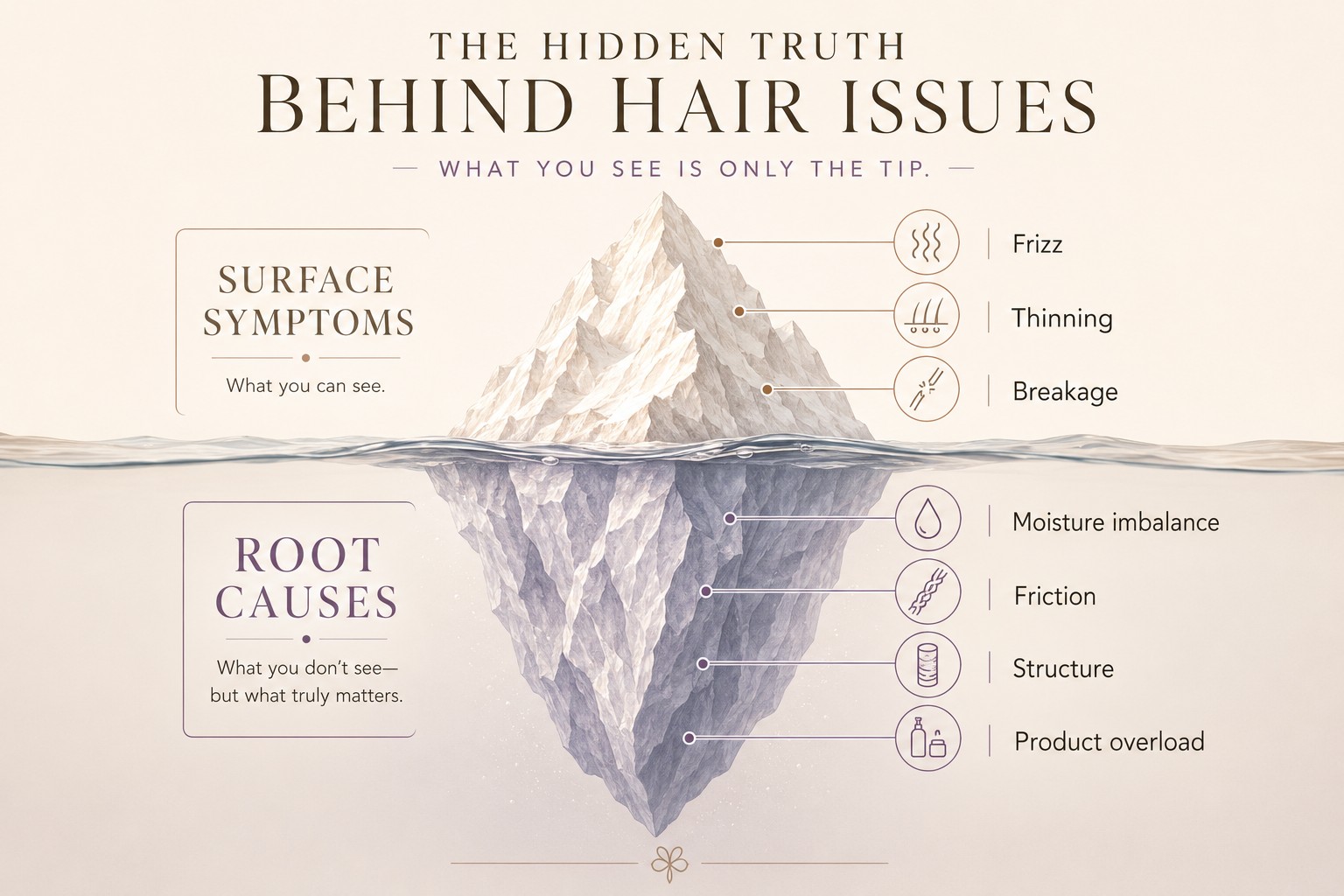
Most hair problems just continue because people are dealing with the effects, not the root causes. Frizz, thinning, and breakage are usually just what's visible, a sign of a deeper issue. When you base decisions only on what you can see, the actual issue remains, and the whole thing starts again.
Most people are reactive with their hair. A problem shows up, and the first impulse is to find a quick fix. This means you're thinking about what product to get first, rather than what's actually causing the trouble. Instead of asking why it’s happening, you’re focused on what will fix it right now.
Only treating the visible problem gives you, at best, a quick improvement. Smoothing frizz without thinking about how much moisture your hair has, or using strengthening products without knowing why it's breaking, these things don't solve anything; they just cover it up for a bit.
What's missing is a methodical approach. Without a reliable way to figure out what's going on and respond to it, each decision feels separate. There's no link between what caused the problem, what you're using to fix it, and what you should do next. And that is why the problem comes back.

Another big reason hair problems stick around is having too many products. When you don't see results quickly, you naturally look for something else to try. Over time, you end up with a huge collection of items with no real plan.
A lot of what you buy is because of trends, what people say, or what the advertising tells you, rather than what your hair actually needs. What works for someone else is used without considering that their hair is a different type, in a different condition, and exposed to a different climate.
Without understanding how the products you use affect each other – or your hair – the results are all over the place. Some mixtures cancel each other out, others overload your hair, and some create totally new issues. Instead of making your routine simpler, more products frequently make the problem even harder to pinpoint and deal with.
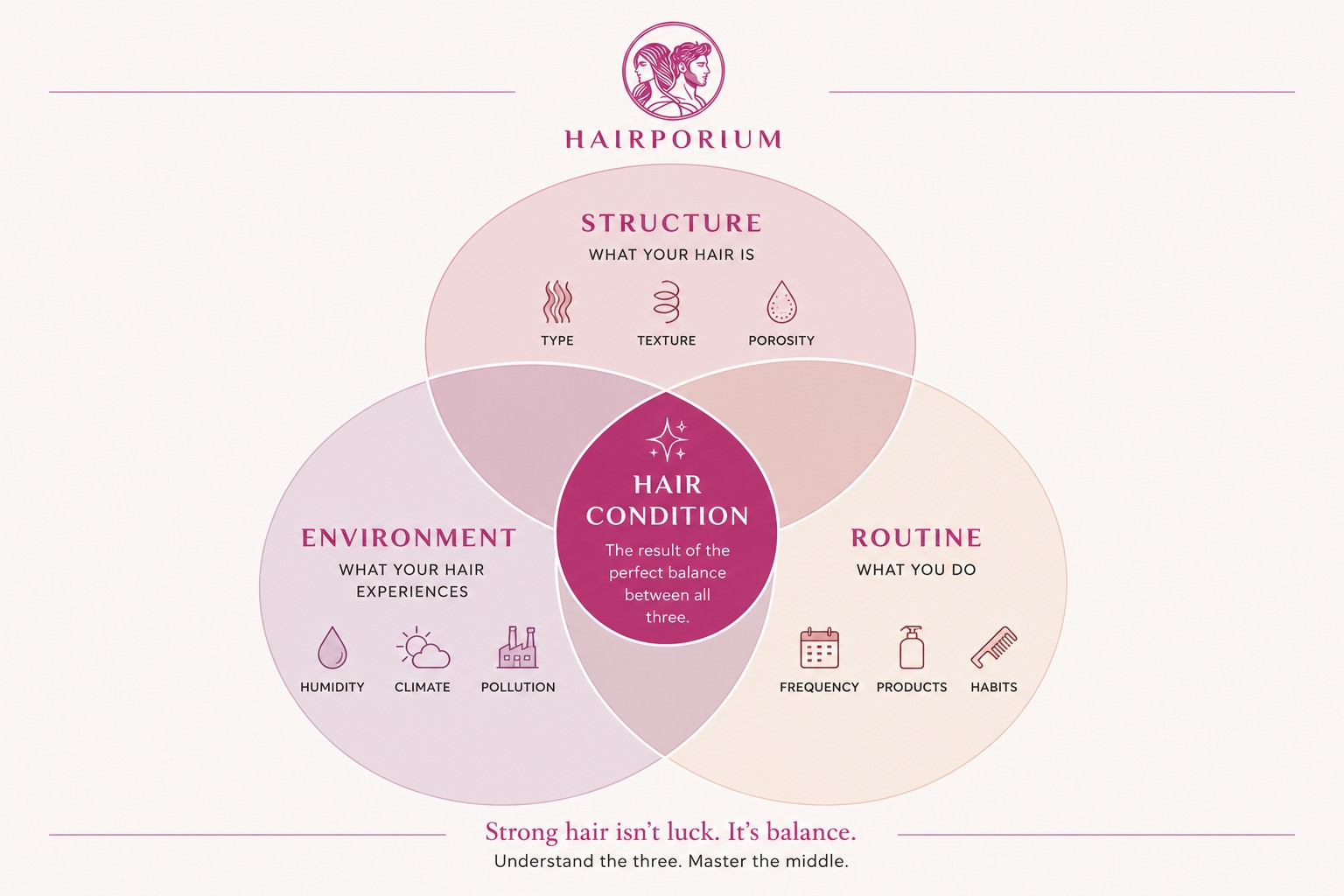
Hair doesn't just do random things. How healthy it is is determined by its structure, the environment, and your routine, all working together. Ignoring these things means your solutions are going to be out of sync with what's really happening.
Your hair's inherent qualities – how thick, textured, and porous it is – dictate how it responds to products and styling. The environment – how humid, hot, or dry it is – changes throughout the day. And your routine – how often you wash, style, and generally touch your hair – has a direct impact on its condition over time.
Treating symptoms while ignoring these elements leads to constant setbacks. Frizz is thought of as dryness, when it might actually be humidity. Breakage is treated with products when it’s really caused by rubbing or pulling. It’s this mismatch between cause and cure that keeps the issues going. The next thing to do is to stop guessing and really define the problem, because without a good description, even the right solutions can be used incorrectly.
You can't fix something properly if you haven't defined it. Most hair issues don't get resolved because they are incorrectly identified from the beginning. If you treat everything as the same sort of issue, your response will be vague... and that’s where bad choices begin.
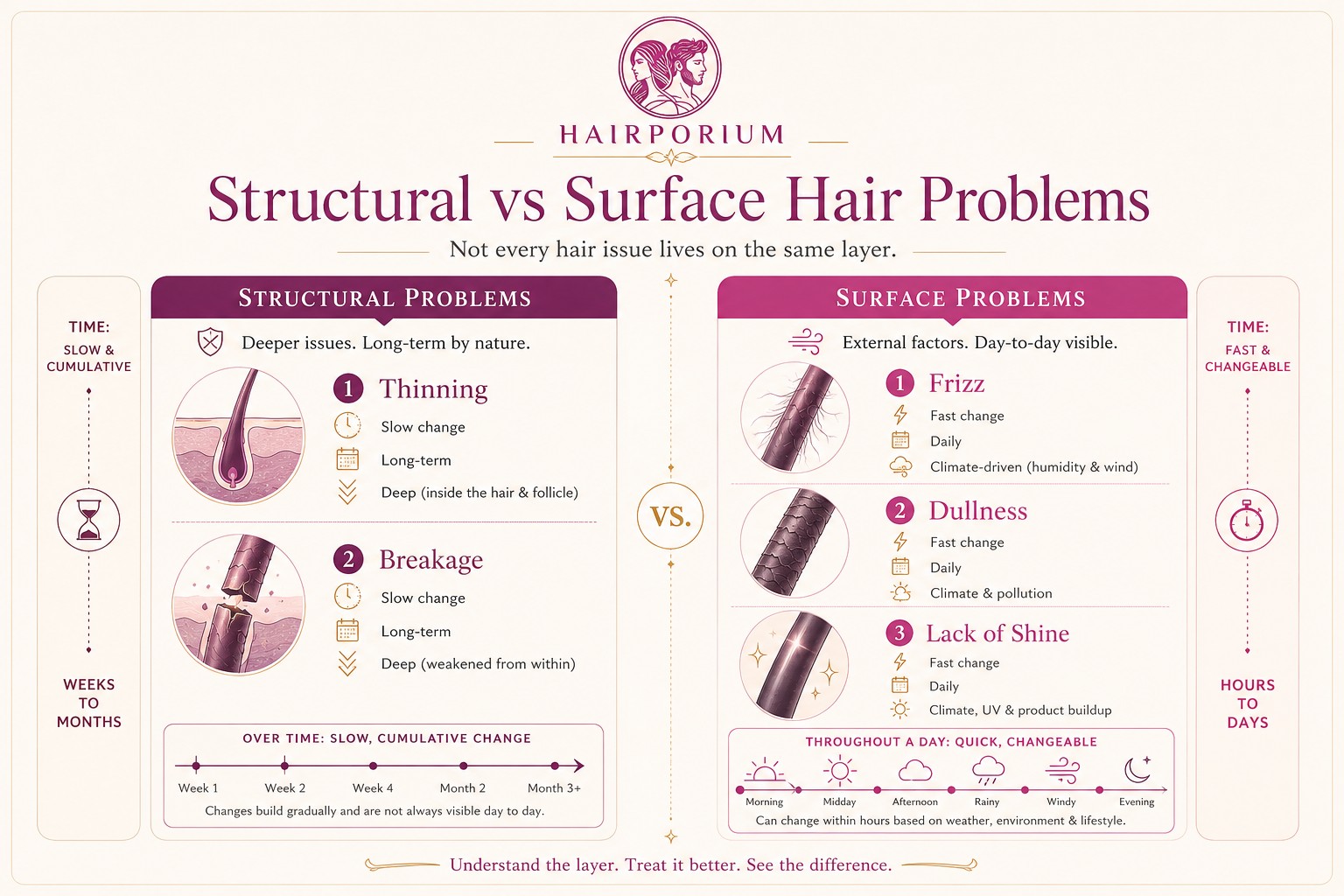
The first thing to decide is the difference between problems with the hair's structure and problems with the surface. Structural issues affect the hair itself – thinning or breakage. These are more serious, build up over time, and need consistent, long-term care.
Surface problems, on the other hand, are what you notice from day to day – frizz, dullness, a lack of shine. These are often temporary and are affected by the climate or how you style it. How things are changing with your hair is often quick, responding to what’s happening around it.
The error comes from confusing these two speeds of change. If you treat a fundamental problem with something for just the surface, your solution will only be for a short time, and won't really fix anything.
And equally, if you go overboard on a surface issue as though it's a core one, you'll use too much product and make things more complicated. Figuring out where the problem actually lives - is it a quick fix or a deeper issue - is the first step to doing something about it correctly.
Some hair issues aren't forever; they're just how your hair reacts to things. Others are with you for the long haul, needing constant care. The weather is a big part of this - humidity gives you frizz, dry air makes hair brittle, and these are just temporary. Similarly, using the wrong products, something too rich or too light, can throw your hair off, but it is easily remedied.
Problems that just keep coming back, no matter the weather or how recently you've changed things, are a different story. They’re tied to what you regularly do, your habits, or just how your hair behaves. Once something recurs, it’s become part of the pattern, not a fleeting thing. Not recognizing this difference leads to fixing temporary things too much, and ignoring those that are ongoing and that’s why you don't get lasting change.
Hair troubles are almost never just one thing. What appears to be a single issue is usually several factors all happening at once. Frizz, for example, could be dryness, damage, and the environment, all rolled into one. Just dealing with one of those isn't going to solve the whole issue.
This is why trying to solve everything with one product or one change usually fails. You’ll get much better results by thinking in layers and carefully tackling each thing that’s contributing.
When you realize a problem is caused by many things, it changes how you approach it - you move away from quick fixes and toward carefully planned adjustments, where you deal with each part deliberately. Defining the problem clearly is the way to then apply that clarity to what you’re actually worried about, and we’ll start with thinning hair.
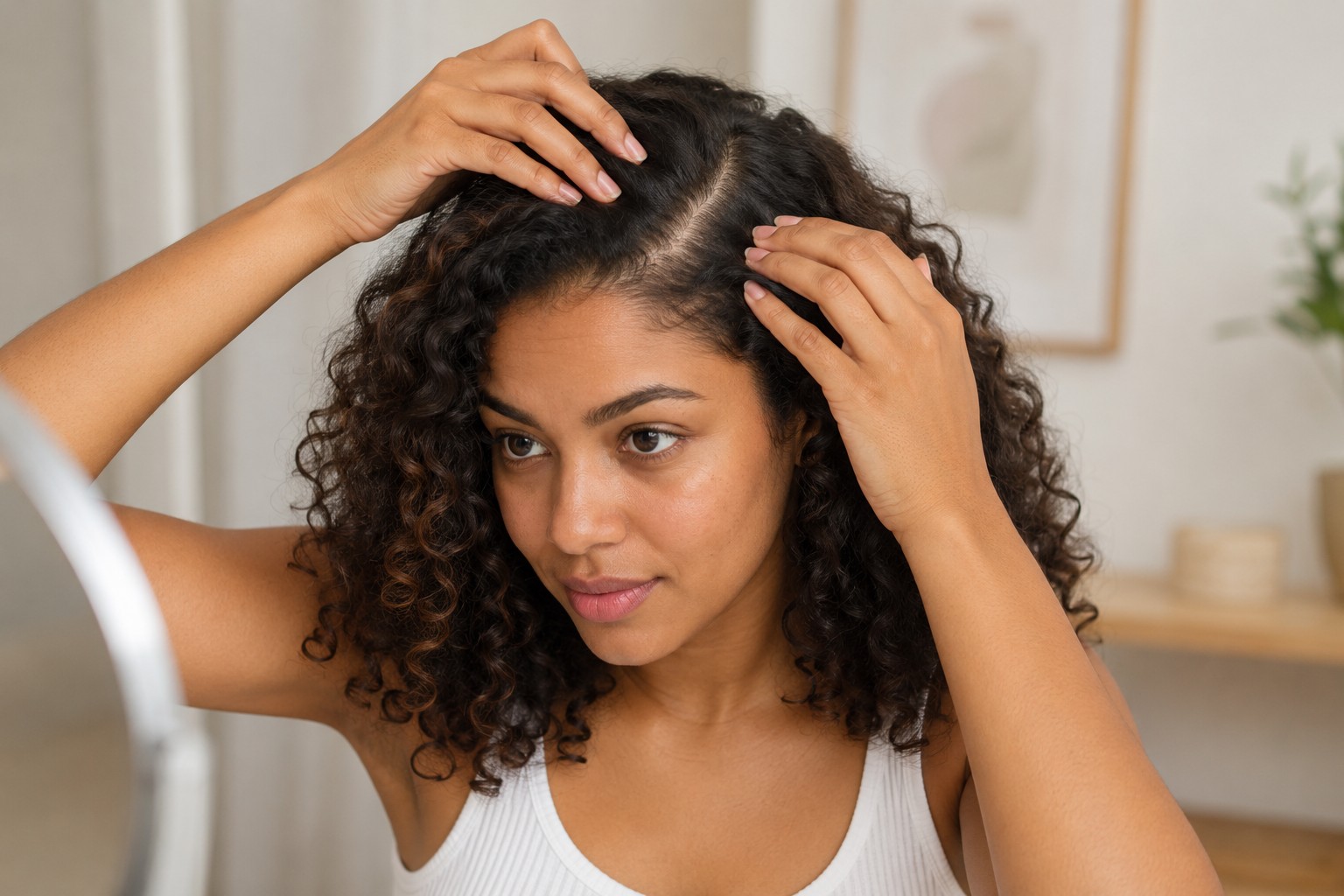
Thinning hair is often handled badly because people respond with how they feel about it, rather than being sensible. The first thing to do is usually a quick attempt to “fix” it, without really knowing what’s going on. And that lack of understanding leads to making choices that don't work consistently and a lot of frustration.
And “thinning hair” doesn't necessarily mean hair loss as most people think of it. It can mean less hair overall (reduced density), or it can be that you just think it's thinner because of how the hair lies.
How much of the scalp you can see is also important. Hair might not be falling out any more than usual, but if the strands are finer or have less body, the scalp will be more obvious. This makes it look like you've lost hair, even if the number of strands hasn't changed much.
Importantly, you need to distinguish between hair shedding (which is normal) and actual thinning (a slow loss of fullness or strength). Getting these two mixed up often causes panic, and you end up changing your routine for no good reason.
There are several things that aren't medical, but build up over time and influence thinning. Stress is a very common one, affecting how hair grows and behaves - although you might not see it immediately, it adds up. Your styling choices matter too. Constantly pulling your hair into tight styles, using a lot of heat, or being rough with it weakens the hair over time.
These things reduce both how much hair you have and how strong it is. Product residue and not looking after your scalp properly can interfere with healthy hair growth and how well it holds. And finally, pollution, heat, and dryness from the environment add to the problem, making thinning more obvious as time goes on. These don't work in isolation; they worsen what’s already happening.
When dealing with thinning hair, it’s mostly about how it looks and what’s practical. You aren't trying to force more volume, but to create the impression of more fullness. Avoid completely flat styles as they show the scalp. Instead, layering the hair in a way that gives it structure helps it spread out, move, and draws attention away from how much (or how little) hair there is.
Techniques to create the illusion of volume - lifting at the roots, shaping around the face - can make a big difference without needing lots of product. What products you do use are crucial. Heavy products flatten hair and make thinning more apparent.
Lighter ones allow it to have movement and lift, improving the overall look. Concentrate on what will look and work best, and don't overcomplicate your routine. Controlled styling choices, rather than frantic reactions, are the best way to manage thinning hair.
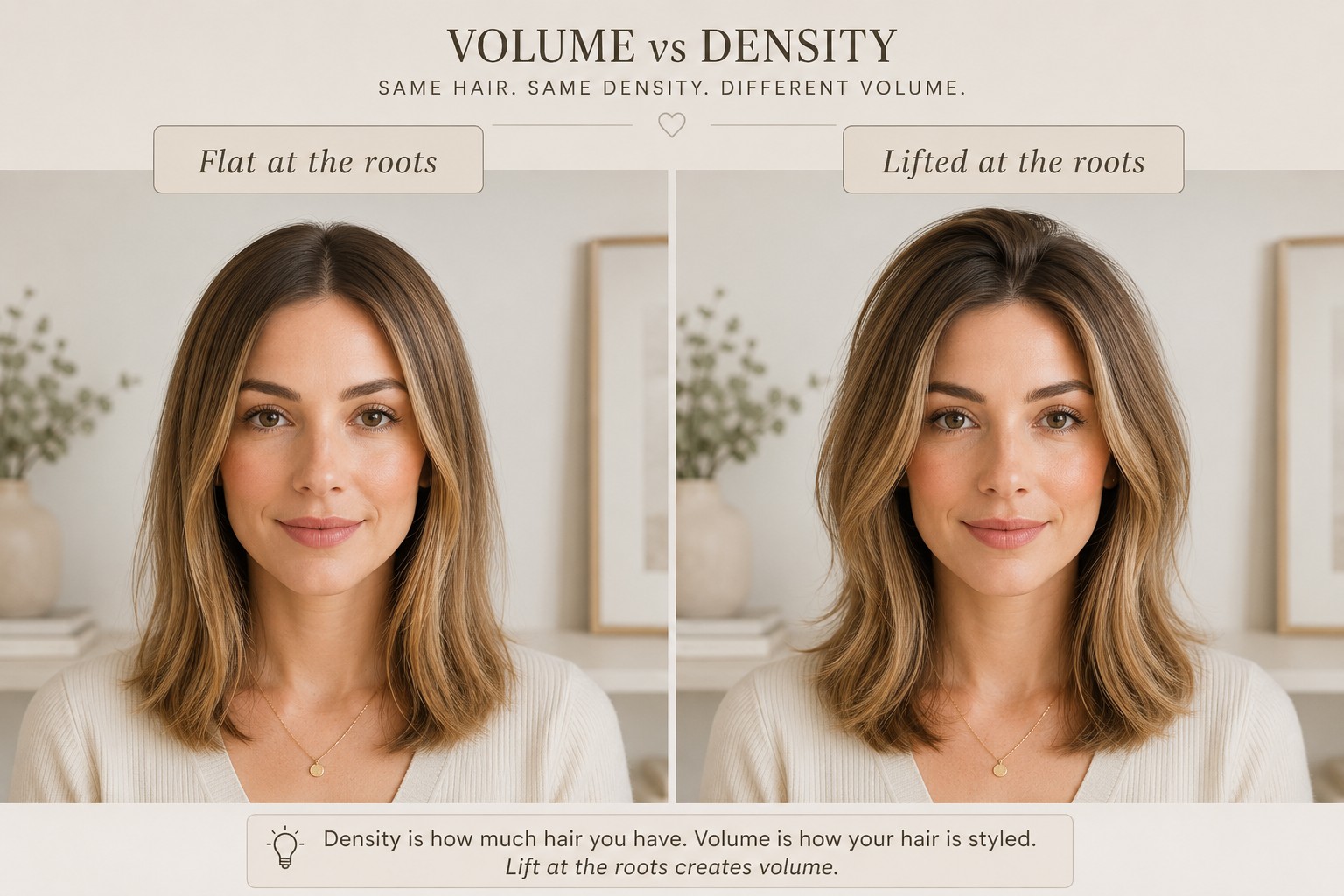
Often, when people think their hair just won't get any volume, the problem isn't the hair itself, but how it’s being styled. It's much more likely to be flattened or incorrectly managed.
A big reason volume disappears is just how hair is built. Fine hair naturally lies very close to the scalp, and so is harder to lift. But that's not the whole story by any means.
And heavy hair products are a huge culprit. Using anything too thick or heavy will flatten your hair and stop it from holding its shape; instead of controlling it, they steal its bounce.
How oil travels along the hair strand is important, too. When oil goes from your scalp to the ends too easily, hair falls flat quickly. This is particularly common with finer hair, where product buildup shows up all too soon.
Volume and density are terms that are often used as if they mean the same thing, but they're not! Density is about how much hair you have, while volume is about how much lift and fullness it has. You could have a lot of hair (high density) but very little volume because it’s weighed down. Or, you could have less hair (lower density) and still get a lot of volume with the right styling.
If you think low volume is the same as low density, you'll make the wrong choices and end up using too much of certain products or techniques that don't actually fix the issue. Understanding the difference between the two allows you to make far more targeted changes, instead of sweeping adjustments that don't work.
Volume is about how you work with your hair, not only what you put on it. You need light products because they allow movement, not restrict it. Focusing your styling at the roots is also really effective – lift at the base makes a shape without needing to build volume along the entire length.
How you dry it, using air or heat, also matters. Too much heat will flatten hair over time, but carefully air drying or only minimal styling helps keep its natural lift. The idea is to help your hair hold its shape, not to force it into something it isn't. Small changes to how heavy your products are and where you focus your styling can create consistent volume, and don't need to be complicated.

Frizz isn't just random. It's a predictable result of things being out of balance. That seemingly uncontrollable mess is usually your hair responding all at once to moisture, its structure, and the weather. When these aren't working together, frizz is what you see.
Moisture imbalance is the main driver of frizz. If your hair doesn't have enough moisture inside, or it's exposed to lots of humidity, it'll try to grab moisture from the air. This messes with the surface of the hair and makes it uneven, fuzzy texture.
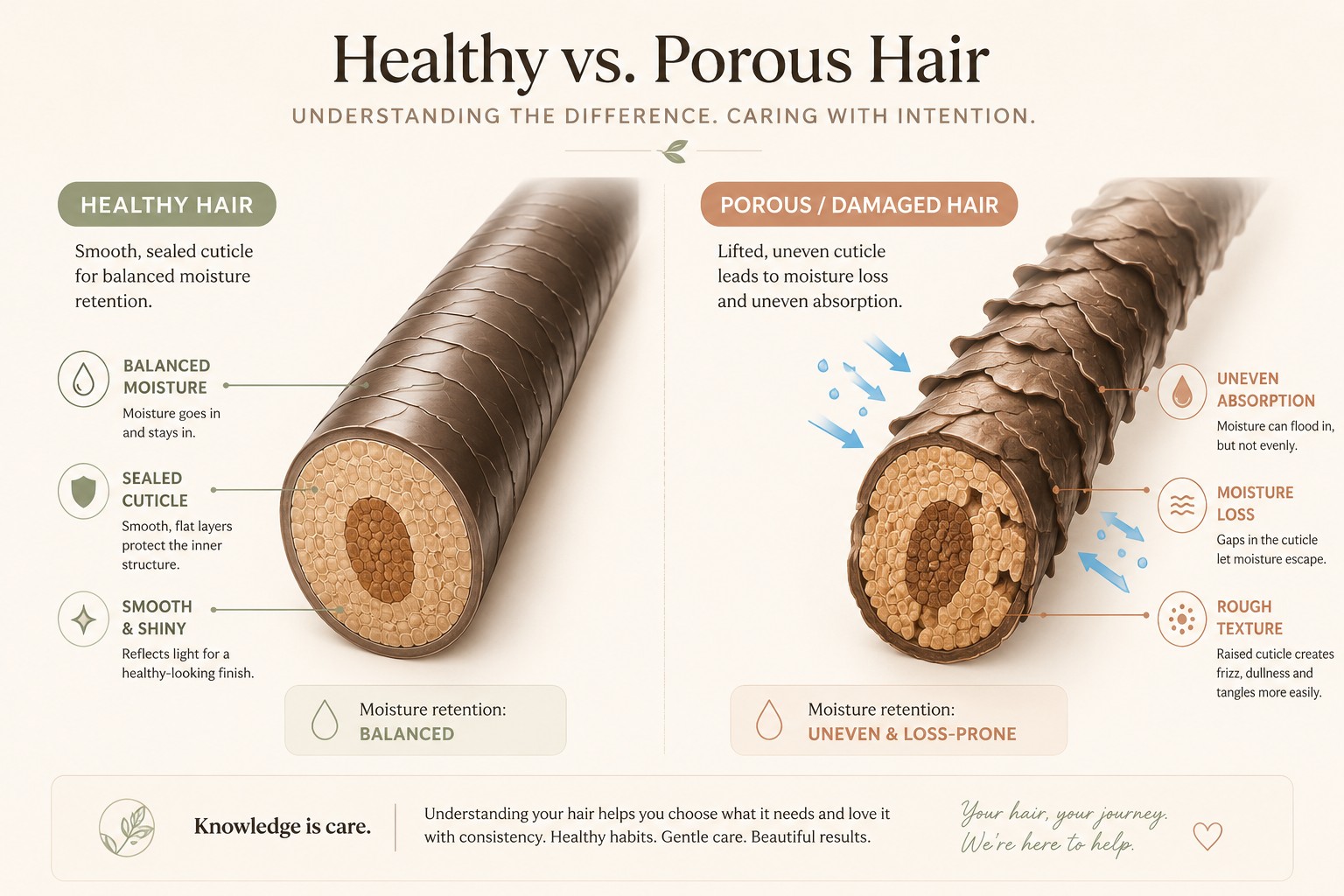
Porosity is key. Hair with high porosity drinks up moisture quickly but loses it just as fast. This constant changing makes it much more affected by the environment, and therefore frizzier.
And how the climate is where you are makes everything worse. In humid weather, hair swells and loses its shape. In dry weather, it becomes brittle and rough. Frizz isn't something on its own - it's how your hair reacts to where it is.
Most ways of dealing with frizz fail because they just smooth the surface, without fixing the original imbalance. A common mistake is using too much oil or serum. Using too much of something to get hair to lie flat will only get it down for a bit, and then it'll end up weighed down or with product clinging to it, and ultimately make the original problem even harder to deal with.
Layering on lots of products is another issue, and usually a confusing one! Unless you know how they all play with each other, they'll be inconsistent. Some will stop moisture from getting in, others will overload your hair, and yet others will just not do anything together.
And a huge mistake is not thinking about humidity, because frizz is very much about the weather. Many hair plans are as if the air around you doesn't exist, but without changing your approach depending on the climate, even amazing products won't work as well as they should.
Effectively managing frizz isn't about eliminating it completely; it’s about having some measure of control. And the first step in getting that control is to understand the difference between locking in moisture from within (sealing) and smoothing the outside (smoothing). You need both, but in the right proportion.
The order in which you apply your products really matters. Getting the order right means they'll help each other, not get in each other's way. It’s generally more successful to start with something light to provide moisture and then seal it in than to just pile on heavy products at random.
The style you choose is equally important. Some styles are just naturally better at resisting frizz because they work with your hair's natural texture instead of trying to force it into a shape it doesn't want to be in. Picking styles that allow the hair to move fairly naturally means you won't be constantly fixing it.
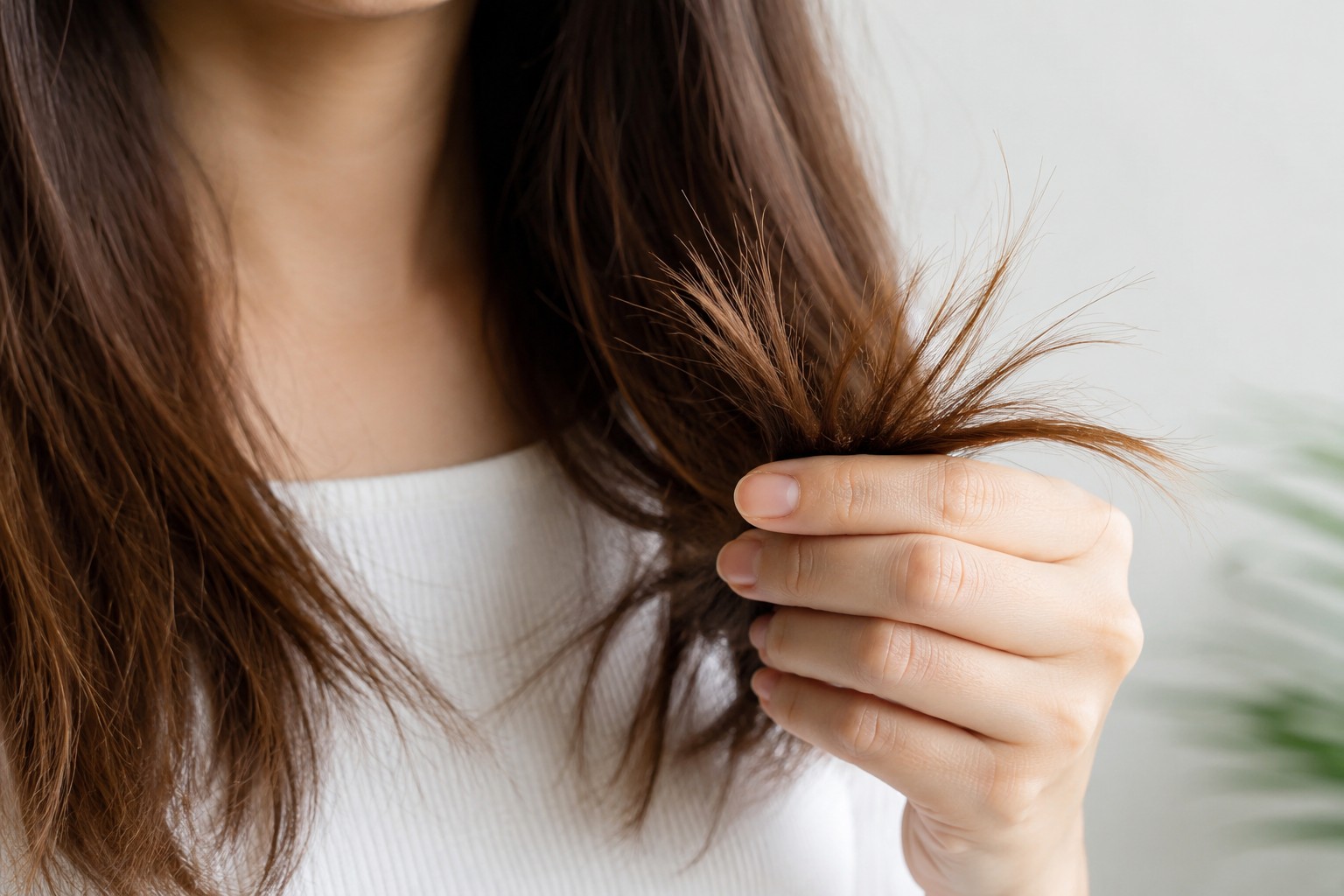
Often, what looks like slow hair growth is actually hair breaking off. Your hair might be growing at a normal pace, but if it’s snapping along the length of the strand, you won't see any length appear. And without dealing with the breakage, having long, strong hair will be tricky.
Breakage tends to show itself in subtle ways before you really notice it. Hair that isn't growing to the same length all over is an early sign - parts of it are breaking off as it grows. Split ends are another obvious signal. When the ends of your hair start to split, they weaken the entire strand, and it becomes even more likely to break.
And actually having the hair snap is the most obvious signal of all. If strands break easily when you brush or style them, the structure is already damaged. People often ignore these early warning signs, and that lets the problem get worse.
What you do every day is the biggest cause of breakage. Using heat on your hair frequently weakens it and makes it less able to handle being pulled. Friction is another thing people don't think about.
Constant rubbing against rough things, tight hair bands, or even brushing too hard all cause stress to the hair over time. And pulling your hair into tight styles is also a factor. Repeatedly pulling in the same direction puts tension on certain spots, making it slowly get weaker and break. Each of these things might not seem like much on its own, but they add up.
Preventing breakage is about lessening the stress on your hair, not trying to fix it after it’s broken. Being gentle is the most important thing: carefully detangling, not pulling on it unnecessarily, and being careful with how you handle it all day. Protective styles help to minimize how much friction and the weather affect it.
By keeping your hair contained and supported, you reduce the chance of it being damaged from being moved around. And changing your routine is just as important. Using less heat, picking the right tools, and sticking with a haircare plan all contribute to stronger, more robust hair. Preventing breakage isn't about doing more; it's about doing things in a way that avoids damage in the first place.
It’s important to accept that not all hair damage can be completely undone – and understanding this really affects the choices you make. A lot of advice is about ‘fixing’ damaged hair fully, but you’ll nearly always need to manage it to some extent. Coming to terms with this makes your expectations more sensible and leads to results you can actually achieve.
Hair is damaged when it’s structurally weakened. This usually happens with a lot of heat styling, chemical processes like dyeing, or being exposed to really harsh treatment. These things impact the hair’s internal strength, making it more porous (full of gaps), less able to bend, and more likely to snap. Once the structure is changed, the hair will act differently and needs a different approach to looking after it.
You won't always see the damage straight away, but over time it’ll show as dryness, a rough texture, and difficulty in managing. Spotting it early is the best way to stop it from getting worse.
There's a huge difference between repairing damage and covering it up. Loads of products will improve how your hair looks and feels, but only for a short time, and they won't actually restore the hair to how it originally was. They might make it smoother, shinier, or easier to style, but the damage is still there underneath.
And that’s not to say those products are useless, just that they have a limited purpose. If you expect products alone to completely fix things, you're setting yourself up to be disappointed. Being realistic about what they can do helps you make better choices and not rely on quick fixes.
To manage damaged hair effectively, you have to start by stopping it from getting more damaged. Use heat less often, avoid harsh treatments, and be more gentle with your hair - this helps to keep it as stable as possible. Using controlled treatments, like conditioning or strengthening, can improve how the hair behaves, even if they won't totally reverse the damage.
The idea is to support how the hair is now, rather than trying to force it to be as it once was. And being realistic is vital. Don't aim for perfect hair, but for gradual and consistent improvement. Properly managed damage will make your hair more predictable, easier to deal with, and less likely to have further issues.
The Hairporium AI Hair Stylist runs your hair concern through structured filters covering hair structure, environment, and routine — so you stop guessing which issue is yours. Free, no account needed.
Get a clear diagnosis →The problems your hair has should decide your style, and not the other way around! A lot of styling mistakes are made when how something looks is more important than how the hair behaves. A style that ignores the underlying problems might look good at first, but won't last in reality. If you base your choices on how your hair actually performs, the results will be much more reliable and easier to hold.
The hair issues you have should definitely affect the kinds of styles you go for. If you don't have much volume, a flat style will only make that more obvious. Instead, try a style with some lift or movement to balance things out without needing to do too much. And hair that’s prone to frizz doesn't suit precise styles that need to be completely smooth.
Choosing a style that fights against your hair’s weaknesses will mean you're constantly trying to fix the same thing. It’s much better to pick a style that naturally makes up for them, which means less adjusting and the hair holding its shape for longer.
Some styles unintentionally make problems much more obvious. Strategically concealing issues isn't about hiding everything; it’s about drawing less attention to the weaker areas. For example, evening out the volume or changing where you part your hair can take the focus away from thinner parts. Achieving balance is more helpful than aiming for something that looks flawless.
Trying to make your hair perfect often leads to over-styling, which makes the problem worse over time. Smaller changes to create visual balance are a more lasting solution. When you focus on controlling the hair rather than perfection, styling becomes a lot easier. You're not trying to get rid of every little fault, but to get a result that will reliably work with how your hair is.
A hairstyle needs to work with your hair's condition and your daily routine. Something might look great, but it won't be successful if it takes too much work to maintain. How much effort a style needs compared to how good it looks is the main thing to think about. If a style takes a long time to do or needs constant correcting, it won't last.
Styles that suit your hair’s behavior and your routine will give you more consistent results with less trouble. When your style and condition are in harmony, it's easier to manage, and the results are more dependable, reducing frustration and letting you make choices that genuinely stick.
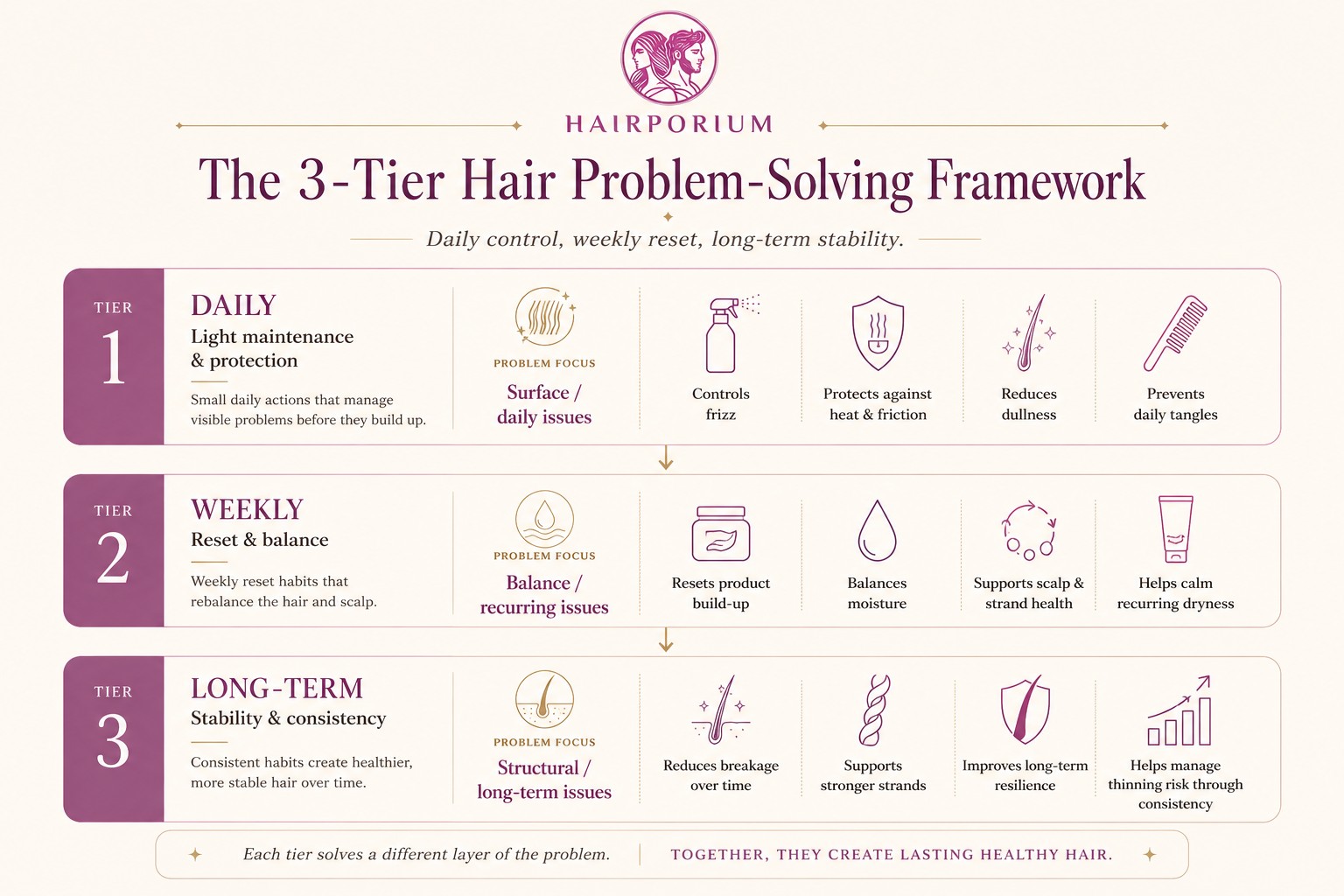
To truly fix problems, you need a planned routine, not just random attempts at improvement. Without being consistent, even the right things won't give you lasting results. A routine creates a link between what your hair needs and how you respond to it over time.
Day-to-day care should be about light maintenance, not big transformations. Little things - gently detangling, styling carefully, and not using too much product - help to keep things stable without doing too much to the hair. Avoiding things that cause damage is equally important: heat, rubbing, and over-handling all contribute to continuing issues.
If you shield your hair from damaging things, it won't get worse. And doing things consistently, at a regular pace, creates a good base. Rather than dealing with issues as they pop up each day, you'll have a stable routine that will give you better results over the long haul.
Think of your weekly routine as a ‘reset’. Washing gets rid of what’s built up, conditioner gets things back into balance, and specific treatments deal with particular problems. This makes sure daily upkeep doesn't turn into something much bigger. And looking after your scalp is part of this reset – a clean, happy scalp means healthier hair, and hair products work better.
Often, if you don't look after your scalp, you’ll get inconsistent results. This weekly reset ties what you do every day to what happens in the long run, strengthening the routine and keeping your hair under control.
For lasting improvement, consistent care is far more important than doing a lot at once. Overdoing it with strong treatments to fix problems frequently throws things out of kilter. A gentle, steady approach is more likely to bring about predictable improvements. And keeping track of how your hair responds over time lets you perfect your routine.
Don't change everything at once; little tweaks let you pinpoint what’s actually doing well. Repetition is where you find stability. When your routine suits both your hair and your life, getting results is simpler, and you won't need to make endless changes.
Sometimes, you can't solve things yourself. If you're diligently trying and still aren't getting better, you probably need professional help. There's no point in continuing to try in the wrong direction; getting expert input can save you time and give you a much clearer plan.
A sure sign you need help is no improvement despite being careful. If you have the same issues again and again, it's likely that you need professional guidance. Repeated breakage or damage that doesn't react to changes in your routine should be checked out. Sometimes these problems are caused by deeper things that need a more focused approach.
Professionals do a methodical analysis and can spot patterns you wouldn't see from your usual routine. A precision haircut shaped around your hair’s problems will help your style hold up. Specific treatments aimed at certain things – say, breakage or scalp health – deliver more targeted help.
This focused approach means less wasted product and more of what truly improves things. And crucially, they’re good at figuring out the basis of issues. Whether it's the structure of your hair, your scalp, or your routine, this clarity gets you a real plan to follow.
To get the most out of a professional consultation, being prepared is key. Saying what you want to achieve will guide the discussion. Discussing your products and routine gives them an idea of where things might be going wrong. And being clear about what your hair issues are means specific solutions can be suggested. Going prepared makes the time you spend with a professional more useful and gets you a better outcome.
Finally, hair improves when your decisions are based on a plan. Without one, what you do will be random and all over the place. A clear plan means deliberate steps that match what the hair needs.
First, work out what kind of problem you have - is it about the hair itself (its structure), what's on the surface, something to do with your routine, or just because of the weather? Properly identifying it means the choices you make will be right for the real cause.
Don't randomly switch things. Constantly changing products or your routine will disrupt things and make it hard to see what's working. Stick with it; consistency means you can really evaluate progress. Building a routine around what actually causes the problem and what's manageable will give you the most consistent improvements.

In short, hair problems don't get better by reacting to them - they get better when you control how you decide what to do. Replacing instant reactions with thoughtful actions means choices that have a lasting effect, rather than just fleeting improvements.
And before you change anything, focus on being clear. Work out what the problem is, understand what's causing it, and choose deliberately. Real, steady improvement comes from systems, not from doing things at random. Hair issues are managed best with confidence, not luck – and the difference is in how you approach making decisions.
Hair shedding (losing 50-100 strands a day) is a normal part of the growth cycle. Thinning is a gradual loss of fullness over time — finer strands, reduced density, or more scalp showing through. Real thinning shows up as a pattern that doesn't bounce back, not a single bad day. If pattern hair loss is the concern, that’s a medical question — see a professional.
Because most hair problems aren't caused by the product — they're caused by the underlying combination of your hair's structure, your environment, and your routine. Switching products without addressing those layers means you're treating effects instead of root causes. The same problem returns in a slightly different form. A structured approach examines structure, environment, and routine together before changing anything.
Dry hair lacks moisture but its structure is intact — adding the right hydration and reducing aggravating factors brings it back. Damaged hair has been structurally weakened (usually from heat, chemicals, or repeated stress) and can't fully recover — products can mask the effects but the underlying weakness stays. Knowing which one you have changes what's realistic: dry hair can be repaired, damaged hair has to be supported and grown out.
No. Frizz is most often a moisture imbalance or porosity issue, not damage. Hair with high porosity drinks moisture in and loses it just as fast, and humidity makes the cuticle swell. Damaged hair can frizz, but plenty of healthy hair frizzes too. Treating frizz as damage often leads to overusing repair products you don't actually need.
When you've been consistent with a sensible routine and you're still not seeing improvement, when the same issue keeps coming back regardless of season or product changes, or when you notice patterns that suggest something more than styling (sudden shedding, bald patches, scalp issues, persistent itching). At that point you're not dealing with a styling problem — you may need either a precision haircut, a trichologist, or a doctor.
Continue exploring the other Hairporium guides covering hairstyle decisions, wigs, extensions, maintenance, lifestyle hair, and the Hair Decision Engine.
What Hairstyle Suits Me?How to Choose the Right WigHow to Choose Hair ExtensionsHair Maintenance GuideLifestyle Hair GuideHair Decision EngineThe Hairporium AI Hair Stylist helps you identify what's really going on with your hair — and what to do about it. Free, no account needed.
Start your free hair consultation →