The issue for most people isn’t getting a wig—it’s finding one that doesn’t look like a wig. This usually comes down to minor things like a hairline that is too smooth, a density that is unnatural, or a texture that does not behave like real hair. This is not necessarily visible in the photo of a product, but when you wear it, you realize it.
This is necessary because wigs are not beautifying accessories. They are often worn daily, and when they fail to look natural, they have to be constantly readjusted, styled, or even changed, which soon becomes expensive.
If you are having difficulty choosing a wig that fits your head properly, the guide below will help you focus on options that add realism rather than mere marketing claims. You will understand what a wig is, what trade-offs are associated with different decisions, and how to avoid traps during shopping.
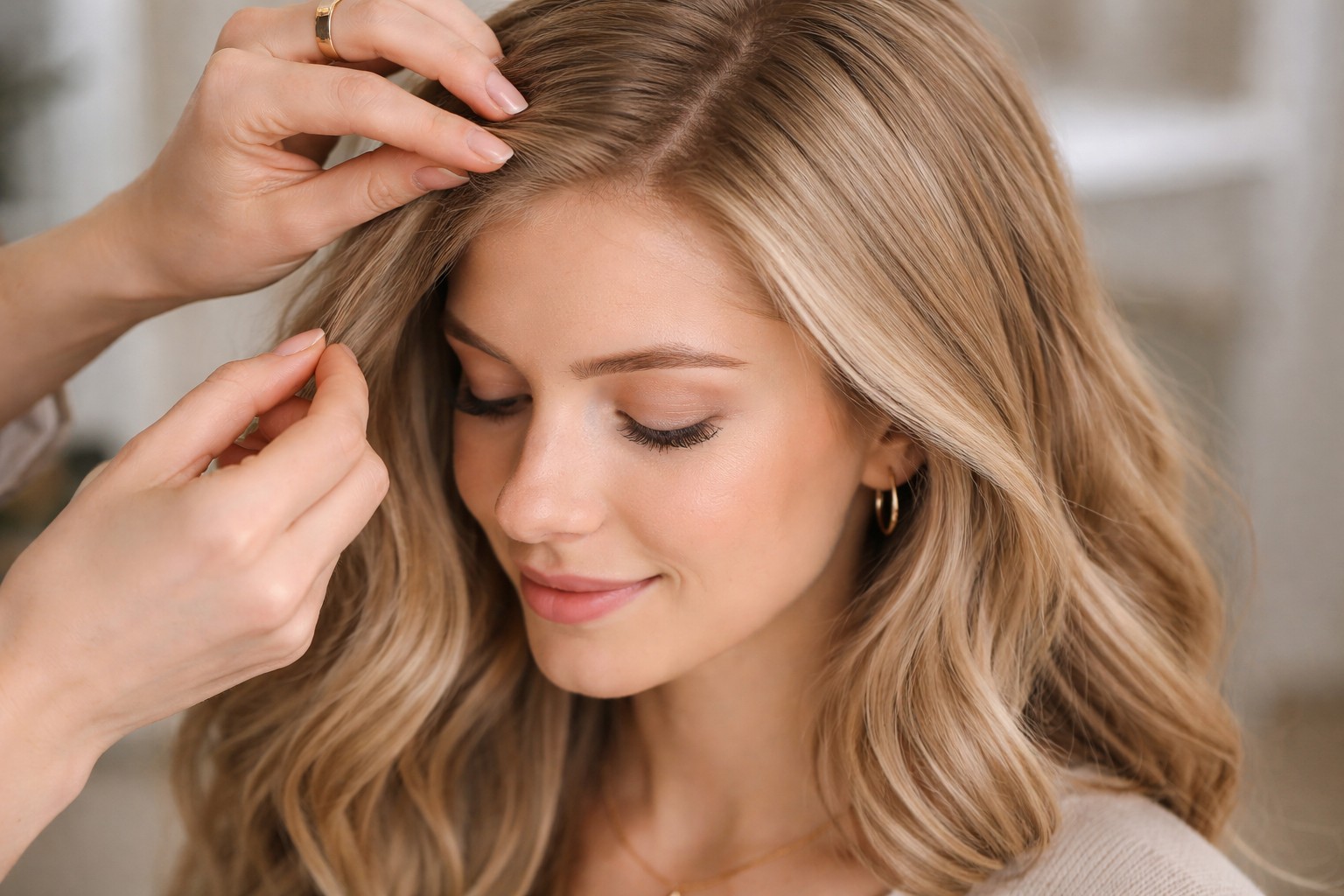
There is no single thing that can make a natural-looking wig look real; rather, it is a combination of elements that must be compatible with one another.
The most significant of them are: how the forehead mingles with your skin, the way the hair flows up, how thick it is in comparison with natural hair, and how neat the wig became to your proportions.
Most of the unnatural wigs are non-functional because they are trying to look perfect. The real hair is not smooth, symmetrical, or thick, and this is what makes it realistic.
Although the hairline is not what people notice first, it is what they see first. Wigs made of lace front tend to be the safest of all because they are more precise where the skin meets the hair.
HD lace or clear lace works best, especially when it matches your skin tone. The illusion can be disrupted by a visible edge created by a heavier lace. Pre-plucked hairlines come in handy, but not necessarily enough. Instead of a straight set of hairlines, it has a slightly curved set, which looks more natural.
The most common error is choosing a wig that is too thick. Many wigs that are being sold are promoted as being full or of luxury quality, but they can hardly appear to be anything but thin at the top.
The medium to light density is more natural, especially when worn as everyday wear. Unless styled, high-density wigs can be artificial.
When you want to be thick, you should make it by being thickened, rather than being overdense in the first place.
Very smooth wigs or shiny ones will appear unnatural, even wigs that have real hair. Natural hair has few irregularities, flyaways, and movement. It is the difference in picking a texture that fits your natural hair type (or something that would grow out of your scalp in real life).
Freely flowing waves or small texture would be more natural compared to a perfectly curled or smooth texture.
The wig will not look natural, even with high-quality hair, unless it is fitted. In case the cap is excessively large, it can move, or it can rest unnaturally. At the micro level, it can pull the hair back, making it appear tight or unnatural.
A good fit ensures: the hairline is where it ought to be, the wig goes with your head, and no lifts or gaps can be seen. It is not an aspect commonly considered, but it is one of the biggest aspects of realism.
Monochrome color is flat and makes it clear. Natural hair is likely to possess natural, diffused highlights, lowlights, or color changes. Even such a fine detail is capable of rendering a wig more believable.
The color should be chosen according to your skin color; however, it should be colored so that it can appear natural.
Long wigs, which can otherwise be very conspicuous, are hard to maintain in their natural appearance. The longer the hair, the higher the irregularities to be observed. Mid-length fashions are typically simpler to maintain and appear more believable with fewer attempts. When deciding on a longer wig, you will need to consider the increased styling and maintenance required to make it look real.
The Hairporium AI Stylist considers your face shape, skin tone, lifestyle and proportions to recommend the right wig for you. Free, no account needed.
Get my personalised wig recommendation →

The images of the products are shown under ideal conditions— lighting, angles, and even editing work. What might be considered a natural-looking wig in a photo could behave very differently in real life.
Most buyers focus on length and color but fail to pay attention to the hairline. A wig of excellent quality will even appear unnatural when the front of the head is made too thick or too flat.
Certain wigs may need to have their hair styled, glued on a daily basis, or even removed to appear natural. Unless your routine can sustain that, the wig will not work for you.
Wearing a very different color, length, or style from your natural look increases the chances of looking unnatural. Even slight variations will be more persuasive and easier to control.
When you find the correct wig, it will be low-effort. You do not always find reasons to look in mirrors, adjust them constantly, or think about the way they appear in a variety of light conditions.
On the contrary, when you select the wrong one: frequent adjustments, styling frustration, and loss of confidence when using it regularly. This is where the actual price is reflected, not only money-wise, but also in daily usage.
Before buying a wig, consider getting into the background and thinking:
Comfort and realism are needed in everyday wear. Flexibility can be achieved through occasional use.
Certain wigs appear to look natural with regular styling. Some are more forgiving.
You need to get a wig that fits you, not just your taste. What is effective on one person might not necessarily translate to another.
The key to picking the right wig that looks natural lies in the details most people overlook. It is not about the best wig, but the one that matches your features, your routine, and what you expect. When these things match, the wig no longer feels like an accessory but becomes your own hair.
The Hairporium AI Stylist analyses your face shape, skin tone, lifestyle and proportions to recommend the right wig for you. Free, no account needed.
Start your free hair consultation →